Meta Description: Problems with your network printer setup? Smart Printer Guide solutions can solve them quickly. Here are 11 proven fixes to connect your printer online and printing today.
Troubleshooting Network Printer Setup Issues: 11 Solutions From Smart Printer Guide
Network printer setup issues are among the most aggravating tech headaches you can experience. One minute everything works fine. The next, your printer is offline, unresponsive, or just flat-out refusing to connect.
If you’re setting up a printer at home or in a small office, these problems crop up more often than they should. The good news? Most of them are easily corrected without having to call a technician.
This troubleshooting guide covers 11 solutions for the most common network printer setup challenges. Each fix is described in everyday language so anyone can follow along.
So let’s get your printer working again.
Why Do Network Printer Setup Problems Occur in the First Place?
Before diving into the fixes, it’s helpful to know what causes these problems.
Network printers work via a chain of links — your device, your router, your printer firmware, and your operating system. If any link in that chain is broken, the printer doesn’t work.
These are the most likely culprits:
| Cause | How Often It Occurs |
|---|---|
| Wrong IP Address or IP Conflict | Very Common |
| Outdated or Missing Printer Drivers | Very Common |
| Firewall Blocking Printer Connection | Common |
| Offline State of the Printer | Common |
| Wireless Signal Problems | Moderate |
| Incorrect Network Settings | Moderate |
| Firmware Bugs | Less Common |
Let’s take them out one at a time and fix them.
Solution 1: Go Back to Basics
It may sound obvious, but the time lost by neglecting this step is in hours.
What to Check First
- Is the printer powered on?
- Are all cables (USB or Ethernet) properly secured?
- Are there any error lights on the printer?
- Make sure the paper tray has paper in it and that it isn’t jammed.
Roughly 15–20% of printer problems are resolved with these quick checks before you so much as touch your computer settings.
Also, restart everything. Shut down your printer, router, and computer. Wait 30 seconds. Plug them back in in the following order: router first, printer second, and computer last.
This clears temporary anomalies in the network stack and refreshes all connections.
Solution 2: Ensure the Printer Is on the Correct Network
This is among the big problems in any smart printer guide that most people forget.
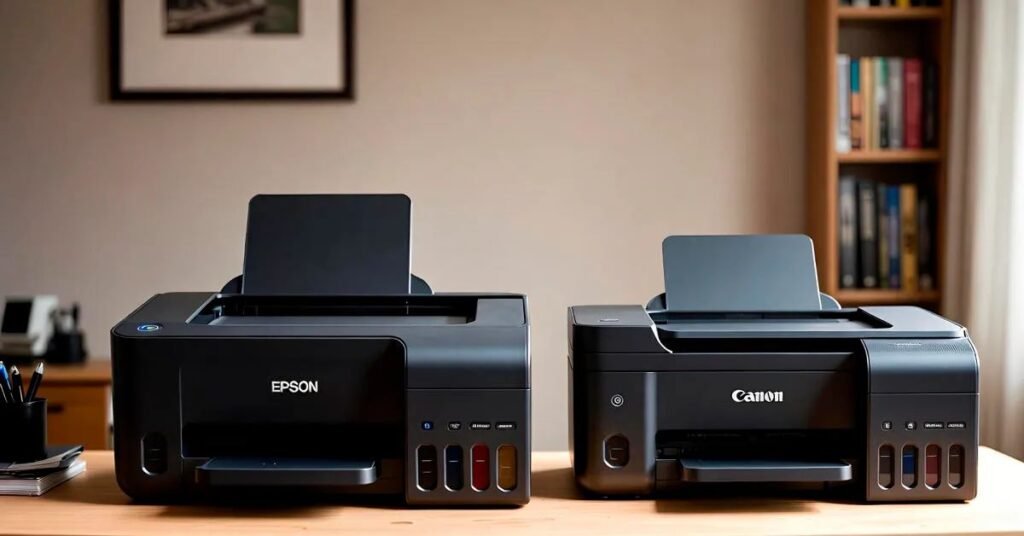
Most homes and offices have multiple Wi-Fi networks. For instance, you may see two networks under the same router — one identified as 2.4 GHz and the other as 5 GHz. Or a guest network isolated from your main one.
They can’t communicate if your printer connects to one network and your computer connects to another — even though both might display “connected.”
How to Fix This
- Find your printer’s control panel or touchscreen.
- Go to Network Settings > Wireless Setup.
- Ensure the printer is on the same Wi-Fi name (SSID) as your computer or phone.
- Otherwise, reconnect and re-enter the password for your printer with a high-speed internet connection.
Tip: Most printers have an option in their settings menu to print a Network Configuration Page. This page displays precisely which network the printer is connected to.
Solution 3: Assign a Static IP Address to Your Printer
An IP address conflict can be one of the sneakiest network printer setup problems.
Your router assigns an IP address to each device on your network. These addresses are configured automatically (known as DHCP) by default. The problem? Your router sometimes assigns the same address to two devices, which creates a conflict. Or it assigns your printer a different IP address after a reboot, severing the connection.
The solution is to give your printer a static (fixed) IP address that never changes.
Steps to Set a Static IP
- Find the current IP address of your printer (run a Network Configuration Page or find it in your router’s device list).
- Log in to your router’s admin panel (which will probably be 192.168.1.1 or 192.168.0.1).
- Look for the DHCP Reservation or Address Reservation section.
- Assign your printer’s IP address to its MAC address.
You can also set the static IP directly on the printer through its network settings menu.
Solution 4: Update or Reinstall the Printer Driver
A driver is a type of software that allows your computer to communicate with your printer. Many network printer setup issues arise from old, corrupt, or missing drivers.
Signs You Have a Driver Problem
- Printer appears but does not print
- Print jobs stuck in the queue
- Error messages like “Driver unavailable”
- Printer worked prior to a Windows or macOS update
How to Update the Driver
On Windows:
- Open Device Manager.
- Locate your printer under Printers or Other Devices.
- Right-click > Update Driver > Search automatically.
On Mac:
- Navigate to System Settings > Printers & Scanners.
- Remove the printer.
- Re-add it — macOS generally downloads the most recent driver automatically.
You can also head straight to the manufacturer’s website (HP, Canon, Epson, Brother, etc.) and download the latest driver for your particular model.
Solution 5: Delete and Re-Add the Printer on Your Computer
The printer profile saved on your computer sometimes gets corrupted. A complete fresh install often resolves difficult connection issues.
On Windows
- Head to Settings > Bluetooth & Devices > Printers & Scanners.
- Click on your printer > Remove Device.
- Click Add a Printer or Scanner and follow the instructions.
On macOS
- Navigate to System Settings > Printers & Scanners.
- Select your printer then click the minus (−) button to delete it.
- Click the plus (+) button to restore it.
Be sure to add it over the network (not as a local USB printer) so that all full network functionality is operational.
Solution 6: Turn Off the “Use Printer Offline” Feature
When Windows is unable to detect printers, it resorts to what’s called “offline” mode. The problem? Sometimes it also forgets to set them back to “online” when the connection is re-established.
This is one of the most frequent — and most maddening — network printer setup issues.
How to Resolve Printer Offline Mode
- Go to Control Panel > Devices and Printers.
- Right-click your printer.
- If you see “Use Printer Offline” ticked, click on it to uncheck it.
- Again, right-click and click on “See What’s Printing.”
- From the menu bar, select Printer > Cancel All Documents.
- Restart the print spooler (see Solution 7).
That forces Windows to reset the connection to the printer and remove any jammed jobs.
Solution 7: Restart the Print Spooler Service
The Print Spooler is a Windows service that manages all print jobs. When it crashes or freezes, nothing prints — and your printer might seem offline even when it isn’t.
It takes less than two minutes to restart it, and it resolves a surprisingly large number of problems.
Step-by-Step Instructions
- Press Windows + R, type services.msc, and hit Enter.
- Scroll down and find Print Spooler.
- Right-click > Restart.
- Wait a few seconds.
- Try printing again.
If you are still having issues after a restart, try stopping the service, deleting the files located at C:\Windows\System32\spool\PRINTERS, then starting the service again. That clears stuck print jobs that won’t go away on their own.
Solution 8: Check Windows Firewall and Antivirus Settings
Your firewall or antivirus software may be blocking your printer’s network communication. This occurs especially following software updates or after you install a new security program.
How to Check
- Head to Control Panel and open Windows Defender Firewall.
- Select Allow an App or Feature Through Windows Defender Firewall.
- Check for your printer software or File and Printer Sharing.
- Ensure both Private and Public networks are checked.
Make sure to check the settings of third-party antivirus programs (such as Norton, McAfee, or Bitdefender) for any blocked applications associated with your printer brand.
Disabling the firewall temporarily as a test is one fast way to confirm it’s the problem. If printing works while the firewall is off, you have a clue as to what should be allowed through.
Solution 9: Run the Built-In Printer Troubleshooter
Both Windows and macOS have tools that automatically detect and resolve network printer setup issues. Most people never use them — but they work remarkably well.
For more in-depth printer troubleshooting tips and step-by-step walkthroughs, you can also visit Printer Troubleshoot Guide — a dedicated resource covering a wide range of printer problems and fixes.
On Windows 11/10
- Go to Settings > System > Troubleshoot > Other Troubleshooters.
- Find Printer and click Run.
- Follow the on-screen instructions.
Windows will look for connectivity problems, driver issues, spooler errors, and configuration conflicts — and try to repair them automatically.
On macOS
Unlike Windows, macOS lacks a dedicated printer troubleshooter, but the Printers & Scanners reset function performs in much the same way:
- Hold Option and click Printers & Scanners in System Settings.
- The hidden Reset printing system option appears.
- Click it to wipe and rebuild your whole printing setup.
Warning: This will erase all printers from your Mac and you’ll need to re-add them afterward.
Solution 10: Update the Printer’s Firmware
Firmware is the built-in software that runs your printer. Firmware updates are routinely issued by manufacturers to correct bugs, enhance compatibility, and resolve security concerns.
If you’ve never updated the firmware for your printer, it may be having trouble with newer operating systems or router configurations.
According to HP’s official support documentation, keeping your printer firmware up to date is one of the most effective ways to prevent connectivity and performance issues.
How to Update Printer Firmware
Method 1 – Via the Printer’s Control Panel: Many modern printers can check for updates directly. Go to Settings > Printer Maintenance > Firmware Update (menu names differ by brand).
Method 2 – Using the Manufacturer’s Software: HP provides HP Smart, Epson has the Epson Software Updater, and Brother ships Brother iPrint&Scan. Launch these apps and check if a firmware update is available.
Method 3 – Manual Download: Go to the printer manufacturer’s support website, type in your model number, and download the latest firmware file. Follow the installation instructions carefully.
Solution 11: Reset the Printer’s Network Settings and Start Fresh
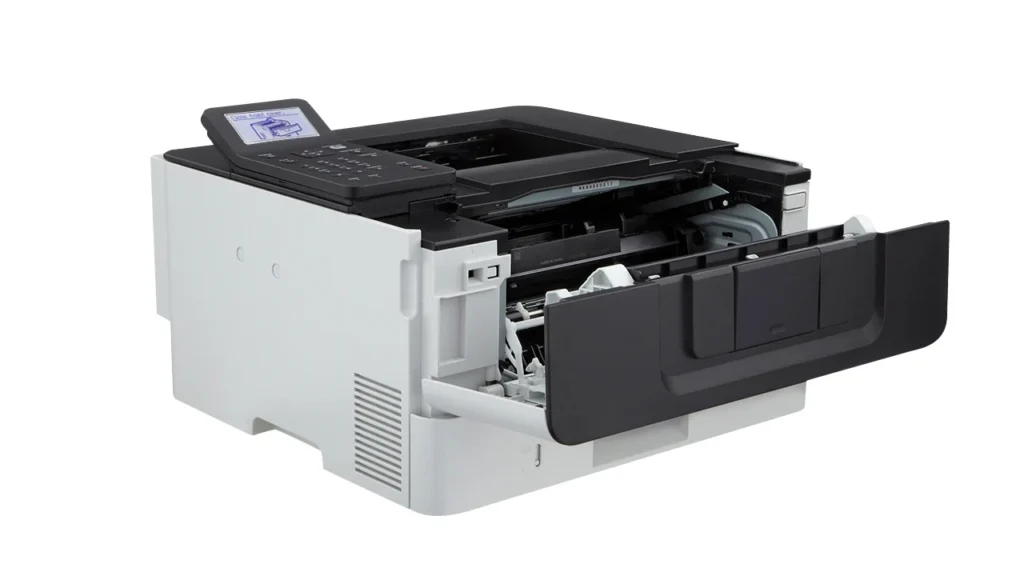
A full network reset is the last resort — and the strongest tool in your kit.
This wipes all saved Wi-Fi credentials, IP configurations, and network profiles from the printer — giving you a completely clean slate.
How to Reset Network Settings
The precise steps vary by printer brand, but the general process is:
- Go to your printer’s Settings > Network Settings > Restore Network Defaults (or something similarly named).
- Confirm the reset.
- The printer restarts and returns to factory network settings.
- Re-run the wireless setup wizard from scratch.
- Reinstall the printer on all devices.
Reconfiguring it takes 10–15 minutes but wipes out any deeply buried configuration errors that other fixes can’t reach.
Quick Comparison: Which Fix Works for Which Problem?
| Problem | Best Solution(s) |
|---|---|
| Printer appears offline | Solutions 6, 7 |
| Cannot locate the printer on the network | Solutions 2, 3 |
| Print jobs stuck in queue | Solutions 7, 6 |
| Driver error messages | Solution 4 |
| Worked before but just stopped suddenly | Solutions 1, 7, 10 |
| New printer fails to connect | Solutions 2, 3, 5 |
| Firewall blocking printer | Solution 8 |
| Nothing else works at all | Solutions 9, 11 |
Helpful Advice on Avoiding Network Printer Issues in the Future
Fixing problems is great. Not having them at all is even better.
Some habits that help keep your printer running smoothly over the long haul include:
- Use a wired Ethernet connection for your printer if you can. Wired is always more reliable than wireless.
- Reserve your printer’s IP address in router settings (Solution 3) so it never changes.
- Keep drivers and firmware current — set a reminder for every 3–6 months.
- Move your printer closer to the router to fix weak Wi-Fi signals.
- Do not power off your printer from the power strip. Use the printer’s own power button so it shuts down properly.
- Clear the print queue whenever it jams. Don’t let jobs pile up.
The Basics of Setting Up a Network Printer (For Beginners)
Here’s what the network printer setup process looks like at a high level, if you’re setting up a network printer for the very first time:
[Your Computer / Phone]
        ↓
  [Wi-Fi Router]
        ↓
  [Network Printer]
A print job is sent from your device via the router to the printer. All devices that need to print to the same printer should be on the same network and know the printer’s IP address to ensure communication between each device.
It stores this IP address whenever you install printer software or add the printer through your OS settings. If anything breaks that path — wrong IP address, wrong network, blocked port, faulty driver — the print job never gets there.
That’s why most of the 11 solutions in this smart printer guide target one particular link in that chain.
FAQs About Network Printer Setup Problems
Q1: Why does my printer continually show offline even after I repair it?
That generally means your printer’s IP address keeps changing. Set a static IP address using Solution 3 and the issue should be fixed.
Q2: My printer is on Wi-Fi, but my computer can’t find it. Why?
They’re probably on different networks. Make sure that both your computer and printer are connected to the same Wi-Fi network name (Solution 2).
Q3: Where do I find my printer’s IP address?
The simplest method is to print a Network Configuration Page from the printer’s settings menu. Alternatively, you can check the device list of your router, or go to Control Panel > Devices and Printers, right-click the printer, and select Printer Properties > Ports.
Q4: Is any special software required to configure a network printer?
Not always. Most printers can be detected and installed automatically on Windows and macOS. But the full manufacturer’s software suite provides additional functionality and makes firmware updates easier.
Q5: Why does my printer work from one computer but not another?
The second computer may simply have a missing or outdated driver, or it may not yet be configured to connect to the printer. On the second computer, follow Solution 4 and Solution 5.
Q6: Can a VPN cause network printer problems?
Yes. VPNs can route traffic from your computer through a different network, making it undetectable by local devices like printers. Try disconnecting the VPN before printing, or set up a split-tunnel VPN that does not route local network traffic through the tunnel.
Q7: Should I connect a network printer using Wi-Fi or Ethernet?
Ethernet is always more reliable. If your printer has an Ethernet port and your router is close, run a cable. You’ll get faster speeds, a reliable connection, and far less headache setting it up.
Wrapping It Up
Network printer setup issues are frustrating — but nearly always fixable.
This smart printer guide provided you with 11 real, tested solutions — from simply rebooting the devices involved to completely resetting the network. Most of these solutions can be done in under 10 minutes. And if you go through them in order, you’ll solve the problem before getting to the last one.
The key takeaways:
- Always check the basics — power, cabling, network
- Static IP addressing eliminates most repeat connection problems
- Keep drivers and firmware up to date
- Don’t underestimate Print Spooler and Offline Mode issues
- When in doubt, use the built-in troubleshooter or perform a clean network reset
Bookmark this guide. Next time your printer won’t behave, you’ll know exactly where to begin.