
Meta Description: Printer Won’t Print? This guide to fast printers features 6 tested solutions for fixing how quickly you can print pesky problems — no tech experience necessary. Back to printing in minutes!
6 Quick Fixes When Your Printer Won’t Print
You press print. Nothing happens. Sound familiar?
It’s one of the most frustrating things that can happen when you’re busy. When printing out a school assignment, work document or an important form — a printer that won’t cooperate feels like a personal attack.
The good news? The vast majority of printer issues are fairly easy to resolve. You don’t have to be a techie. You just have to know where to look.
This fast printer guide takes you through 6 real & proven solutions which can fix your deep-rooted printing problems. All of the solutions are simple, step-by-step instructions that anyone can follow.
Let’s see if we can get your printer up and running again.
Why Printers Fail to Work in the First Place
Before diving into possible remedies, it’s good to understand why printers misbehave.
Printers are a combination of hardware and software that work in tandem. When one tiny thing fails — a faulty cable, an out-of-date driver, a stuck job in the queue — everything can freeze up.
Here are some common culprits:
| Problem Type | What It Means |
|---|---|
| Connectivity issues | Printer isn’t correctly connected to your computer |
| Driver problems | Outdated or missing program that talks to the printer |
| Print queue jams | Old or stuck jobs blocking new ones |
| Low or empty ink | Not enough ink to finish the job |
| Offline status | Printer believes it’s cut off, even though it isn’t |
| Paper troubles | Jams, wrong paper size, empty tray |
Now let’s correct them — one by one.
Solution 1: Verify the Fundamentals First
This might sound too simple. But you’d be amazed how often the problem is something so obvious.
Before you jump to technical solutions, check off this quick checklist:
Is the Printer Actually Turned On?
Check the power button. Look for any indicator lights. Many printers these days will go into sleep mode and require a tap to wake up.
Is Everything Plugged In?
Ensure that your USB cable is properly connected to both the printer and computer. If there is a loose connection on either end, the printer will quit.
Pull the cable from the socket and plug it back in. Sometimes that’s all it takes.
Is the Paper Tray Loaded?
Open the tray and check. Make sure the paper is:
- Stacked neatly and not overcrowded
- Aligned properly with the guides
- The correct size for what you are printing
Also check for a paper jam. Even a small scrap of ripped paper stuck inside can clog everything.
Is There Enough Ink or Toner?
Most printers show ink levels — either on the printer screen itself or as an option in your computer’s printer software. If one cartridge is empty, the printer frequently won’t print at all, even if other colors are still full.
Quick Tip: Use the printer’s built-in diagnostic or test page function. This should be a button combination or menu option on most printers. If the test page prints, the hardware is all good — and you have a software problem.
Solution 2: Change the Printer Status from Offline to Online
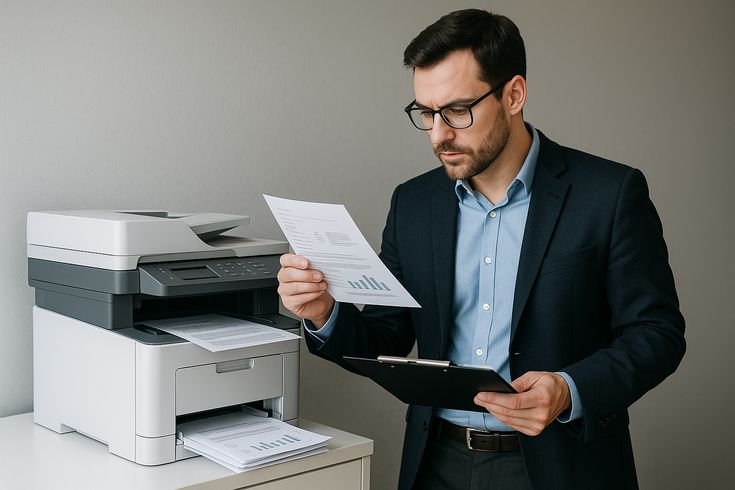
This is one of the most common causes for a printer not responding — and it’s extremely simple to fix.
Your computer may send print jobs to your printer, but the printer appears as “Offline.” That means to your computer, the printer is not available and nothing goes through.
How to Reset Your Printer Back to Online (Windows)
- Press the Start menu, then hit Settings
- Choose Devices, then Printers & Scanners
- Click on your printer’s name
- Select Open Queue
- In the new window, click Printer from the top menu
- If you see Use Printer Offline with a checkmark next to it — click it to uncheck it
That puts your printer back in online mode.
How to Do It on a Mac
- Click the Apple menu and open System Preferences
- Go to Printers & Scanners
- Choose your printer from the left side
- Click Open Print Queue
- If the printer is paused, click Resume
Still Showing Offline?
Try powering down the printer, waiting 30 seconds, and then starting it again. Then repeat the steps above.
When you are on Wi-Fi, be sure that the printer is connected to the same network as your computer. Many “offline” issues occur when a printer joins a guest network or another Wi-Fi band (2.4GHz vs 5GHz).
Solution 3: Clear the Print Queue (This Will Change Your Life!)
Here’s a scenario that most everyone runs into:
You hit print five times because nothing was happening. Now there are five copies in the queue — and all of them won’t print. In fact, they’re blocking everything else.
Clearing the print queue is almost always the answer to this one.
How to Clear the Print Queue on Windows
Method 1 — The Easy Way:
- Go to Settings → Devices → Printers & Scanners
- Click your printer → Open Queue
- Right-click each job and select Cancel
- Wait for the queue to clear
Method 2 — If Jobs Won’t Delete:
Jobs that are stuck sometimes won’t cancel. Here’s the more powerful fix:
- Hit Windows + R and type
services.msc— hit Enter - Scroll down and locate Print Spooler
- Right-click it and select Stop
- Open File Explorer and navigate to:
C:\Windows\System32\spool\PRINTERS - Delete everything inside that folder (not the folder itself)
- Return to Services, right-click Print Spooler and choose Start
- Try printing again
This removes any corrupt or stuck files causing the blockage.
How to Clear the Queue on a Mac
- Go to System Preferences → Printers & Scanners
- Click your printer then choose Open Print Queue
- Hit the X button next to each job to delete it
- Try printing again
Pro Tip: Reboot your PC after clearing the queue before sending a new print job. It sets a clean slate for everything.
Solution 4: Update or Reinstall the Printer Driver
Think of a printer driver as the translator between your computer and your printer. If that translator is out of date, corrupt, or missing — communication falls apart entirely.
Updating or reinstalling the driver resolves a huge number of printing problems that appear mysterious on the surface. For a deeper look at driver-related issues and more advanced fixes, visit Printer Troubleshoot Guide — a dedicated resource for solving all kinds of printer problems.
How to Check If Your Driver Needs Updating (Windows)
- Press Win + X, then select Device Manager
- Expand the Printers section
- If you see a yellow warning triangle next to your printer — that’s a driver issue
- Right-click the printer and select Update Driver
- Choose Search automatically for drivers
Windows will automatically search for and install the latest version.
Download the Driver Directly From the Manufacturer
Windows doesn’t always have the right driver available by default. If so, go directly to the source:
| Printer Brand | Driver Download Page |
|---|---|
| HP | support.hp.com |
| Canon | usa.canon.com/support |
| Epson | epson.com/support |
| Brother | support.brother.com |
| Lexmark | lexmark.com/support |
Search for your specific printer model and download the latest driver for your operating system.
How to Completely Reinstall the Driver
If updating doesn’t work, a fresh installation is usually effective:
- Go to Settings → Devices → Printers & Scanners
- Click on your printer and choose Remove Device
- Restart your computer
- Visit the manufacturer’s website and download the newest driver
- Run the installer and follow the on-screen instructions
- Re-add your printer through Printers & Scanners
This wipes any corrupted driver files and starts completely fresh.
Fixing Drivers on Mac
Drivers are handled slightly differently on a Mac. The easiest fix is:
- Go to System Preferences → Printers & Scanners
- Hit the – button to remove your printer
- Restart your Mac
- Press + to add your printer again
- macOS will automatically detect and install the proper driver
Solution 5: Restart the Print Spooler Service (Windows Only)
Print Spooler is a Windows background service that manages all your print jobs. If it crashes or freezes — which it does sometimes — nothing prints.
Restarting it fixes many mysterious printing failures and takes less than two minutes.
Step-by-Step: Restart the Print Spooler
- Press Windows + R on your keyboard
- Type
services.mscand hit Enter - A list of services will appear — scroll down and look for Print Spooler
- Right-click it and select Restart
- Wait a couple of seconds for it to restart
- Close the window and try printing again
If Restart is grayed out, use Stop first — wait 10 seconds — then click Start.
Set It to Start Automatically
While you’re in the services window, it’s worth checking that the Print Spooler is configured to start automatically each time your computer boots up:
- Double-click Print Spooler to open its settings
- Find the Startup Type dropdown
- Set it to Automatic
- Click Apply → OK
This stops the service from shutting itself down silently after a restart.
Solution 6: Run the Built-In Printer Troubleshooter
Windows and Mac each have built-in tools specifically designed to find and fix printer issues. These are fast, free tools that often catch what even manual fixes miss.
Windows Printer Troubleshooter
- Go to Settings → System → Troubleshoot
- Click Other Troubleshooters (titled “Additional Troubleshooters” on older Windows)
- Locate Printer and click Run
- Follow the on-screen steps
Windows will scan your printer setup, detect problems, and attempt to fix them automatically. It usually takes 1–3 minutes.
What the Troubleshooter Can Fix:
- Offline printer status
- Stuck print jobs
- Driver conflicts
- Communication errors between computer and printer
- Network connection issues (for wireless printers)
Mac Printer Diagnostics
Mac doesn’t have a one-click troubleshooter like Windows does, but it does have a built-in interface for printer management. According to Apple’s official support documentation, resetting the printing system is one of the most effective ways to resolve persistent printer issues on macOS:
- Go to System Preferences → Printers & Scanners
- Hold Ctrl and click your printer
- Select Reset Printing System
- Re-add your printer after the reset
This is a slightly more advanced step, but it removes all saved printer settings and starts from scratch. It solves problems that nothing else can.
Quick-Reference Comparison: Which Solution Fits Your Problem?
| Symptom | Best Solution to Try First |
|---|---|
| Printer won’t turn on | Solution 1 — Check basics (power, cables) |
| Printer shows “Offline” | Solution 2 — Fix online/offline status |
| Multiple stuck print jobs | Solution 3 — Clear the print queue |
| Printer worked before, now doesn’t | Solution 4 — Update/reinstall the driver |
| Random printing errors in Windows | Solution 5 — Restart the Print Spooler |
| None of the above worked | Solution 6 — Run the troubleshooter |
Wireless Printer Not Working? Extra Tips for Wi-Fi Printers
Wireless printers come with their own set of issues. Here are a couple more things to check if your printer connects over Wi-Fi:
Make Sure Printer and Computer Are on the Same Network
Dive into your printer’s Wi-Fi settings (which can typically be accessed via its touchscreen or button menu) and verify which network it is connected to. Then check that against the network your computer is on.
If they’re not identical — even slightly — they can’t talk to each other.
Restart Your Router
Sometimes the problem isn’t with the printer or the computer. It’s the router. Unplug it for 30 seconds and plug it back in. Wait a minute for it to fully reboot, then try to print.
Set Your Printer to a Static IP Address
This is a more advanced fix, but worth trying if your wireless printer keeps constantly disconnecting. Printers that acquire a new IP address each time they reconnect can become “lost” to your computer.
Setting a static IP gives the printer an identical address on your network every time. Consult your printer’s manual or the manufacturer’s support page for instructions specific to your model.
FAQs: Printer Won’t Print — Your Questions Answered
Q1: Why does my printer show up as offline when I know it’s powered on?
This most commonly occurs because your computer lost its connection to the printer. The printer’s status did not update correctly. Manually switch it back to online by following Solution 2 in this guide.
Q2: I cancelled all print jobs but the queue won’t clear. What do I do?
Stuck jobs waiting in the queue need a stronger fix. Stop the Print Spooler service, manually delete the files found in the PRINTERS folder, and then restart it. Full steps are in Solution 3.
Q3: How do I know whether my printer driver is the culprit?
If your printer was functioning without a hitch and then suddenly stopped after a Windows update — or it has a yellow warning icon in Device Manager — it’s probably the driver at fault. Solution 4 explains exactly how to resolve this.
Q4: My printer prints a test page but will not print from my computer. Why?
If the test page prints, the printer hardware is functional. The issue is software-related — probably a driver problem or a clogged print queue. Start with Solutions 3 and 4.
Q5: Is this fast printer guide relevant for all brands?
Yes! The fixes in this guide work with all major brands — HP, Canon, Epson, Brother, Lexmark and others. The steps may look slightly different based on your model, but the overall process is the same.
Q6: My printer prints blank pages. Is that a different problem?
Blank pages are generally due to empty or clogged ink cartridges. Run the cleaning cycle on your printer (found in the printer settings or on the printer itself) and check ink levels. Replace cartridges if they’re empty.
Q7: Should I use third-party printer repair software?
Exercise caution with third-party tools you find on the web. Many of them are unnecessary, and some do more harm than good. Stick to built-in tools and software provided directly by the manufacturer whenever possible.
What to Do If None of These Solutions Work
If after trying all six solutions your printer still won’t print, here’s what to do next:
Contact the Manufacturer’s Support Line Every major printer manufacturer offers free support. HP, Canon, Epson, and Brother all provide chat, phone, and remote support options. They can guide you through advanced diagnostics for your specific make and model.
Look for Firmware Updates Some printer issues are caused by having outdated firmware (the software that resides inside the printer itself). Look for firmware updates based on your model number from your manufacturer’s website.
Check for Hardware Damage If your printer is older and has had several paper jams or has been moved around a lot — there may be internal hardware damage. In that case, a professional repair or replacement might be your most practical option.
Wrapping It All Up
A printer that refuses to print should not ruin your day.
You can reduce most printing problems to just six simple issues — and this fast printer guide has you covered with a clear solution for each one. Whether it’s a connection problem, a stuck print queue, an outdated driver, or a frozen Windows service — now you have the tools to fix them yourself.
Here’s a quick summary of the 6 solutions:
- Check the basics — power, cables, paper and ink
- Fix the offline status — inform your computer that the printer is accessible
- Clear the print queue — delete any stuck or frozen jobs
- Update or reinstall the driver — refresh the software connection
- Restart the Print Spooler — reset the Windows printing service
- Run the troubleshooter — allow your OS to identify and resolve the problem automatically
Go from the top down. The majority of people find their fix within the first two or three solutions.
Printing issues are irritating — but they’re nearly always solvable. And now you know exactly how to fix them.