
Meta Description: 7 Real Printer Guide Mistakes That Caused My Printer Errors — discover the exact blunders that triggered constant jams, streaks, and failures, and how to fix them fast.
7 Real Guide Mistakes That Made My Printer Errors
I thought I wasn’t a total dunce when it came to printers.
I followed tutorials. I watched videos. I even read the manual — most of it. But my printer was giving me error after error. Pages came out crooked. Ink smeared. Every third page, like clockwork, the printer jammed.
I finally put it all together after weeks of frustration.
The problem wasn’t the printer. It was me. To be more precise, it was the printer guide settings that I had incorrect all along.
Printer guides are the little plastic or metal sliders inside your paper tray. They look simple. They seem like an afterthought. But if they are wrong, the dominoes fall into a series of errors that can make any printer seem totally broken.
In this post, I’m sharing the 7 real mistakes I made with my printer guides — and exactly how I solved each one. If your printer is causing you grief, then you’re most likely making at least one of these same mistakes.
What Are Printer Guides (And Why Change Them)?
Before diving into the mistakes, let’s be clear on what printer guides do.
Printer guides are adjustable tabs inside your paper tray. Their role is to keep the paper steady so it feeds straight into the printer. When guides are correctly set, paper runs effortlessly through the machine. And when they’re off — even a little bit — everything gets derailed.
Printer guides are like bumpers on a bowling lane. If the bumpers are in the wrong place, the ball falls straight into the gutter. Same idea here.
Most printers have two guides:
- Side guide — keeps paper positioned from side to side
- Back guide — maintains proper paper feed in front
Both of these need to be correctly configured. Disregarding one of them is a recipe for mistakes.
Mistake #1: I Placed the Guides Too Close to the Paper
That was my very first mistake — and it created more problems than I had envisaged.
I figured tighter was better. With the guides pressing against the paper, the paper couldn’t move, right? Made sense in my head.
In reality, the opposite happened.
Why Too-Tight Guides Cause Problems
When placed too tightly against the stack of paper, guides generate friction. The paper isn’t free to glide through the printer. Instead, it lags, bends a little, and sometimes comes in crooked.
The result? Jams. Misfeeds. Pages with diagonal printing. And my personal bane — the “paper jam” error when no paper is visible anywhere in sight.
The Fix
Leave a small gap — roughly the thickness of a fingernail — between the guide and the stack of paper. The paper should fit snugly but still slide out easily if you give it a nudge.
After I made this adjustment, jams dropped off a cliff. It seemed too easy to be the solution. But it worked.
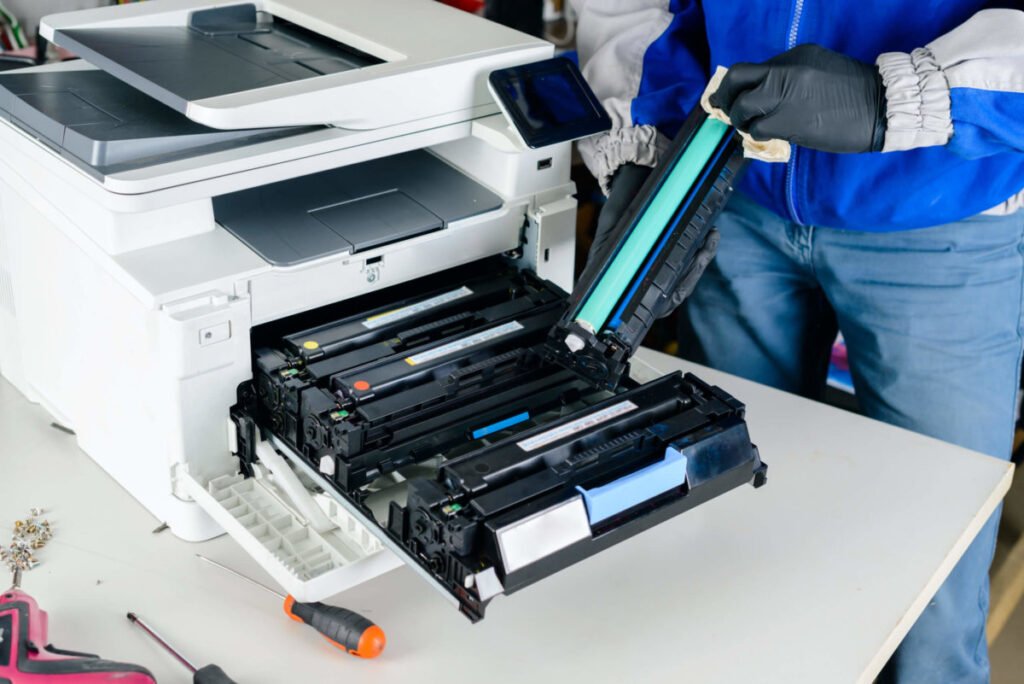
Mistake #2: I Left the Guides Way Too Loose
Okay, so after my too-tight disaster, I overcorrected.
I figured, “If tight is bad, loose is going to be fine.” That left me with a fair amount of extra room in the guides. The paper could flap about freely in the tray.
This caused an entirely different set of headaches.
What Goes Wrong When Guides Are Too Loose
When there is too much space, the paper moves as it feeds through the printer. It goes into the printer at an angle rather than head-on. The printer’s rollers grasp it unevenly.
This leads to:
- Crooked printing on the page
- Text or images that are skewed slightly
- Ink bleeding off one edge
- The printer stopping mid-page
I printed out a whole batch of documents for a school project this way. Every single page was skewed. I had to reprint everything.
The Fix
Set the guides so they just graze the edges of your paper — no space, but also no pressure. A good trick: once paper is loaded, gently try to slide one sheet out. It should slide with light effort, but not fall out on its own or take brute force.
Mistake #3: I Loaded the Wrong Size of Paper Without Adjusting the Guides
This one is obvious in hindsight. But at the moment, it got me each time.
I had been using plain old letter-size paper. One day I needed to print a document on legal-size paper. I shoved the legal paper into the tray — right over the guides that were still set for letter size.
The paper barely fit. The guides weren’t anywhere near the edges of the new, longer sheets.
The Chain Reaction This Caused
The legal paper had far too much freedom. It shifted every time the feed roller grabbed it. Pages came out with content cut off on one side. On some prints, the printer even threw a “wrong paper size” error, despite the fact it was the correct size.
The real kicker? The printer sensors got confused too because my guide settings did not match the paper.
The Fix
Reset guides every time you change paper size. Don’t assume the guides will adjust on their own. Move the back guide and side guide to match the exact size of your new paper.
Size labels are usually printed on the tray itself. Use them. They’re there for a reason.
| Paper Size | Dimensions | Guide Adjustment Needed? |
|---|---|---|
| Letter | 8.5″ x 11″ | Yes, if switching from another size |
| Legal | 8.5″ x 14″ | Yes — back guide moves significantly |
| A4 | 8.27″ x 11.69″ | Yes — slightly different from letter |
| Photo 4×6 | 4″ x 6″ | Yes — both guides need major adjustment |
Mistake #4: I Did Not Use the Back Guide at All
I’ll be honest. For the first few months of having my printer, I didn’t even know there was a back guide.
I adjusted only the side guides. I thought those were what really counted. The back guide just… waited. I never touched it.
What Does the Back Guide Actually Do?
The back guide holds the trailing edge of the paper — the bottom of the stack. The paper stack isn’t fully supported without it adjusted correctly. Sheets may tilt forward or backward while sitting in the tray.
When a tilted sheet gets grabbed by the feed roller, it enters at an angle. Sometimes the printer catches it. Often it doesn’t.
I kept getting multi-feed errors — when the printer grabbed two sheets at once instead of one. I blamed the paper. I blamed humidity. I did everything except the obvious: my back guide was set incorrectly.
The Fix
Pull out the back guide until it lightly touches the rear edge of your stack of paper. The stack should rest flat and fully supported from all sides. After I did this, my multi-feed errors virtually disappeared.
Mistake #5: I Used Bent or Damaged Paper Guides
Somewhere along the way, I noticed there was a small crack in my side guide. I had too hastily jammed a thick stack of paper into it, and one of the plastic tabs bent outward.
I ignored it. The guide still moved. It still “held” the paper. I thought it was fine.
It was not fine.
How Damaged Guides Wreck Everything
A bent or cracked guide won’t lay flat against the paper. It creates uneven pressure. One part of the guide might press against the paper while another bows away, leaving a gap.
The paper stack ended up slightly off-center. Sheets fed in at microscopic angles that added up over several pages. As the session continued, long print jobs got more and more crooked.
I also noticed ink smearing at the edges of some pages — because the paper had been slightly misaligned as it moved beneath the print head.
The Fix
Inspect your guides regularly. Check for cracks, bends, or tabs that won’t sit flat. If a guide is damaged, replace it.
Replacement paper trays or guide parts are typically available through most printer manufacturers. Some third-party sellers offer them online for just a few dollars. This is one of those fixes that costs next to nothing and makes a world of difference.
Mistake #6: I Overfilled the Paper Tray and Failed to Recheck the Guides
Most paper trays have a little line inside them. It reads “MAX” or displays a line with an arrow. That line is meant to show you the paper capacity.
I overfilled the tray constantly. I felt I was being efficient, cramming in as much paper as possible. Fewer refills, more printing.
What I didn’t know is that overfilling causes the paper stack to rise too high, which actually pushes the guides a little further outward.
The Hidden Problem With Overfilling
With too much paper in the tray, the stack is thicker. This additional bulk applies lateral pressure on the guides. Eventually they begin to drift away from their set position.
That leaves the paper more room to move. Feeds become inconsistent. Some pages come out perfectly. Others are tilted.
I noticed this issue primarily with long print jobs. The first 20 pages would be fine. By about page 40, the pages were noticeably off.
It was the paper settling and the guides gently drifting that caused it.
The Fix
Don’t load past the MAX line. Ever. This is not only about paper capacity — it’s about ensuring your guides remain stable for the entire duration of a print job.
For heavy printing, consider dividing paper into smaller batches and reloading the tray between sessions.
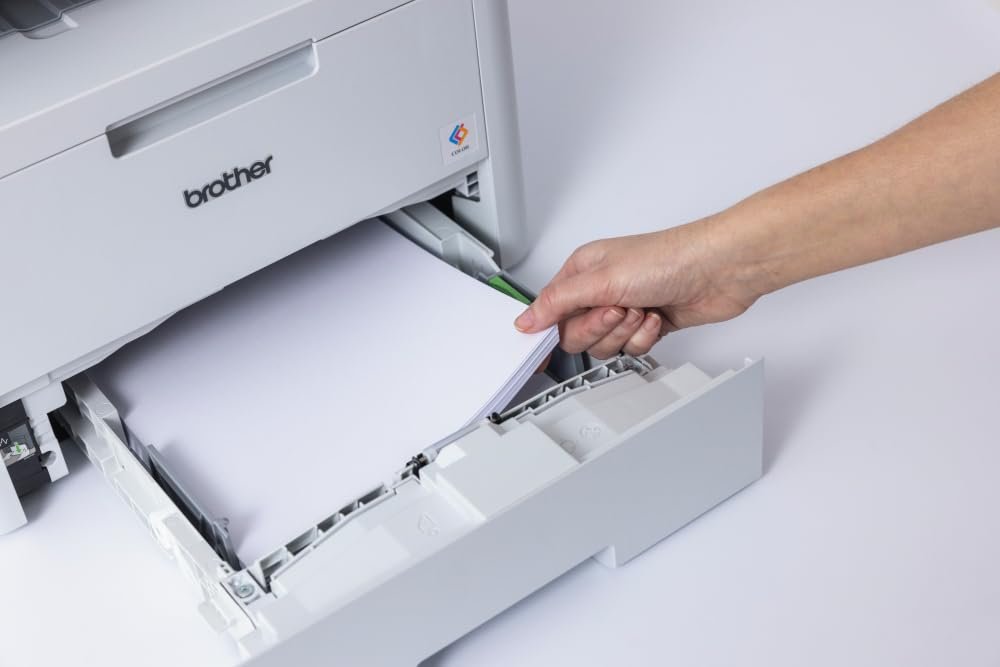
Mistake #7: I Never Cleaned the Guides or the Paper Tray
This was the one I took the longest to find.
Over months of use, my paper tray collected a surprising amount of dust, paper particles, and tiny bits of debris. The guides, which are textured to grip paper, were caked with very fine powder from the paper itself.
I thought guides were basically maintenance-free. They’re just plastic. What could possibly need cleaning?
Why Dirty Guides Cause Real Print Errors
Paper is coated with a thin chalk-like substance that rubs off over time. This debris accumulates on guides, rollers, and sensors inside the printer.
On the guides specifically, this buildup alters the texture. Instead of smooth guidance, the paper snags slightly on the residue. It causes micro-hesitations as the sheet feeds in.
These tiny pauses cause:
- Banding on the page (horizontal lines across the page)
- Uneven ink distribution
- Periodic jams with no discernible cause
- Sensor faults that show up as mysterious error codes
The Fix
Every 2–3 months, pull the paper tray out and wipe down the guides with a lightly damp, lint-free cloth. Let it dry completely before putting paper back in.
Also wipe down the bottom of the tray where paper sits. Paper dust accumulates there too.
A quick clean takes under five minutes. It can save you hours of troubleshooting.
Quick Overview: All 7 Mistakes at a Glance
| Mistake | What Went Wrong | The Fix |
|---|---|---|
| Guides too tight | Friction caused jams and misfeeds | Leave a fingernail-width gap |
| Guides too loose | Paper shifted and printed crooked | Guides should just touch paper edges |
| Wrong paper size, no adjustment | Pages cut off, sensor errors | Reset guides every time you change paper size |
| Ignored back guide | Multi-feed errors, tilted sheets | Adjust to support bottom of stack |
| Damaged guides | Uneven pressure, smearing, drift | Replace cracked or bent guides |
| Overfilled the tray | Guides drifted, late-job alignment issues | Never exceed the MAX line |
| Never cleaned the guides | Banding, jams, mysterious error codes | Clean guides every 2–3 months |
Signs Your Printer Guides Are the Issue (Not the Printer)
Not sure if guides are causing your printer errors? Look for these clues.
Your guides are probably the issue if:
- Printing looks fine at first, then gets progressively worse
- Jams happen without any visible paper stuck inside
- Pages come out slightly angled or skewed
- You recently changed paper sizes
- You haven’t adjusted or cleaned guides in months
- Errors are inconsistent — sometimes it works, sometimes it doesn’t
The problem is likely something else if:
- Print quality is poor even with one sheet hand-fed
- Error codes appear before any paper is loaded
- Ink colors look wrong across all tests
- The printer is making a grinding or clicking sound
If you’re still struggling to pinpoint the cause of your printer problems, Printer Troubleshoot Guide is a helpful resource covering a wide range of printer errors and step-by-step fixes for most common printer issues.
How to Set Printer Guides Correctly, Every Time
Now that you know what not to do, here’s a straightforward and repeatable process for getting guides right:
Step 1: Clear the tray of all paper.
Step 2: Move all guides to their widest position.
Step 3: Load your paper stack. Keep it tidy — tap the edges on a flat surface first so sheets line up.
Step 4: Do not load past the MAX line.
Step 5: Move the side guides in until they just touch the paper edges lightly. No pressure, no gap.
Step 6: Push in the back guide until it lightly touches the trailing edge of the paper stack.
Step 7: Gently test the paper — try to slide one sheet out. It should move with little effort.
Step 8: Print a test page before beginning a major job.
That’s it. Eight steps. Once you get the hang of it, takes about half a minute.
According to HP’s official printer support documentation, correctly loading paper and adjusting guides is one of the most effective ways to prevent paper jams and feed errors across all printer models.
FAQs: Common Questions About Printer Guide Errors
Q: Can incorrect guide settings seriously damage my printer permanently? A: Generally not, though repetitive paper jams can wear down internal rollers over time. Fixing guide settings early prevents such wear.
Q: My printer says “paper jam” but there’s no jam. Could guides cause this? A: Yes. Tight or misaligned guides can cause the paper to hesitate in front of a sensor, triggering a false jam error even when no paper is actually stuck.
Q: How can I tell if my paper guides are set for the right paper size? A: Most trays have size markings printed right on the tray. Once the guides are set, check their position against these markings. They should line up with your paper size.
Q: Do I need to adjust guides differently for thick paper or cardstock? A: Yes. Thicker paper needs a little more space since it’s stiffer and won’t flex as easily. Give it just a hair more room than regular paper.
Q: Does paper brand or quality affect how guides should be set? A: Somewhat. Cheaper paper releases more dust and its sheets may be marginally inconsistent in size. Higher-quality paper generally feeds more reliably with standard guide settings.
Q: My printer only has one side guide. Do the same rules apply? A: Yes. Single-guide printers usually align paper to one fixed wall, with the guide on the opposite side. The same rules apply — snug but not tight.
Q: How often should I completely clean out my paper tray? A: Every 2–3 months is good for regular use. If you print heavily — hundreds of pages per week — do it every month.
In Closing: The Smallest Parts Create the Biggest Headaches
Printer guides are easy to overlook. They’re small. They’re plastic. There are no buttons or settings on a screen. They’re not exciting.
But as I discovered after a lot of frustrating printing sessions, these tiny sliders are responsible for a large percentage of common printer errors.
It takes less than a minute to get them right. Getting them wrong can cost you hours of troubleshooting, wasted paper, and a heap of unnecessary stress.
Go check your guides right now. Seriously.
Pull them out, reload your paper correctly, and set everything up the right way. Then print a test page. You’d be surprised how much more cooperative your printer becomes — without touching a single setting in your software.
All the printer guide mistakes I made were avoidable. Now that you know what they are, you shouldn’t have to make them either.