
7 Authenticated Printer Guide Stories and How to Solve Printer Problems
Meta Description: Printer Guide stories from real life — 7 of the most annoying issues — with exact solutions that I fixed myself, set you up for right now at home or work.
My Printer Was Driving Me Crazy. (Then I Fixed It.)
Printers are strange machines. They function flawlessly for weeks, and then — nothing. A blank page. An error code. A blinky light that means precisely nothing to you.
I’ve been there a time or two myself.
Over the years, I’ve repaired printers for me, for friends, coworkers and a few strangers in coffee shops who spotted me fiddling with my machine and asked for assistance. I learned something new from each problem.
This printer guide is not going to be the “check your connections” advice you find in the rest of the internet. These are real stories. Real frustrations. Real fixes.
If your printer is acting up right now, odds are good that the problem resembles one of these seven stories — and so too does the fix.
Story 1 — The Printer That Only Printed Blank Pages
What Happened
It began on a Monday morning. I had to print a report for my meeting. I pressed print, the printer whirred, sheets fed through — and out came a perfectly blank page. Every. Single. Time.
No error message. No warning light. Just white paper.
The next step was to check the ink levels. Full. I printed a test print from the printer itself. Still blank. I was completely confused.
The Diagnosis
After struggling with it for about 20 minutes I figured it out. There was still a protective tape on the ink cartridge.
I had swapped the cartridge two days prior. I removed one strip of tape and not the other — the one that covered the ink nozzles themselves.
It’s an embarrassingly simple error but it is among the top reasons a printer prints blank pages.
The Fix
I took out the cartridge, removed the leftover tape, gently wiped the nozzle with a wet cloth and reinstalled it. Printed a test page. Perfect.
If you get blank pages, here’s a quick checklist:
| Possible Cause | Quick Check |
|---|---|
| Tape still on cartridge | Remove cartridge and inspect |
| Empty cartridge | Check ink levels in printer software |
| Clogged print head | Run head cleaning from printer settings |
| Wrong paper settings | Make sure paper type matches your settings |
| Corrupted print job | Cancel all jobs and restart the print queue |
What I Learned
Be sure to check new cartridges before putting them back in. Manufacturers apply two or three pieces of tape on cartridges, and it’s easy to miss one.
Story 2 — The “Offline” Printer That Was Obviously On
What Happened
My home printer appeared “offline” on my laptop. The printer was on. The Wi-Fi light was solid. The laptop was connected to the same network. But Windows kept insisting that the printer was offline and wouldn’t send it any jobs.
I restarted both devices. Still offline. I reinstalled the printer. Still offline. I wanted to toss the thing out the window.
The Diagnosis
It took me a while to crack this one. It turns out the problem was never with the printer — it was Windows.
Windows sometimes gets stuck with an old IP address for a printer. Your router assigns the printer a new IP address (routers sometimes do that) and Windows doesn’t automatically update. So it keeps trying to communicate with the old address that is gone.
The Fix
Here’s exactly what I did:
- Found the printer’s current IP address (printed a network config page directly from the printer)
- Opened Control Panel → Devices and Printers
- Right-clicked the printer → Printer Properties → Ports tab
- Found the port being used and clicked Configure Port
- Updated the IP address to match the printer’s current address
- Hit OK and tried printing
It worked immediately.
Alternatively, you can assign your printer a static IP address that never changes. Most printer web interfaces — accessible by typing the printer’s IP into a browser — will allow you to do this under network settings.
What I Learned
When a printer appears offline yet looks perfectly fine, you can almost always blame the problem on the network. Before reinstalling drivers, check the IP address first.
Story 3 — The Printer That Kept Jamming on Each Page
What Happened
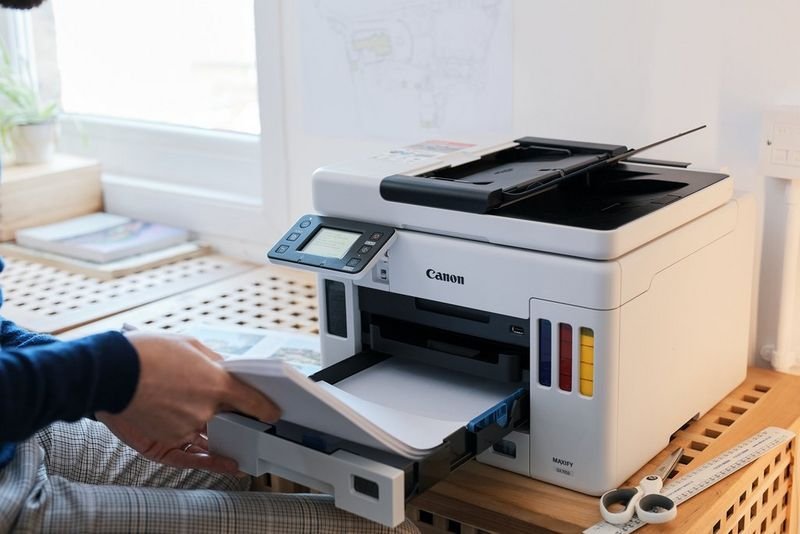
A colleague asked me to check out the office printer. It was jamming all the time — every couple of pages, the paper would crumple inside and the printer would stop with an angry beeping sound.
We would clear the jam, restart the printer, print a page, and jam again. It was completely unusable.
The Diagnosis
I popped the paper tray out and immediately saw the issue. The paper guides — the little plastic sliders that hold the paper in place — were too loose. The paper was feeding through sideways, catching on the rollers at an angle.
On top of all this, the paper stack was too thick. The tray had been filled above the maximum fill line.
The Fix
I set the paper guides so they were snug (but not tight) against the edges of the paper stack. I removed over 30% of the paper to get it under the max fill line.
I noticed the rollers were dusty too, so I wiped them down with a slightly damp cloth.
The printer then churned out 50 pages with no jams whatsoever.
Common paper jam causes and fixes:
| Likely Cause | Fix |
|---|---|
| Too loose paper guides | Adjust guides so they just touch the paper |
| Overfilled paper tray | Fill below maximum fill indicator |
| Worn or dirty rollers | Clean with damp cloth |
| Incorrect paper size chosen | Set within print settings to match selected paper size |
| Damaged, curled, or wet paper | Use fresh flat paper kept dry |
| Torn bits of paper inside printer | Open all accessible panels and remove debris |
What I Learned
Paper jams are usually not mechanical failures. They occur because of minor setup errors — guides being too loose, packing the tray with more paper than it can handle, or using poor-quality paper. Always look over the essentials before declaring the printer to be damaged.
Story 4 — The Printer That Made Streaky, Faded Prints
What Happened
One evening my neighbor knocked on my door holding a stack of printed photos. They all had a white horizontal line streaking across them. Some had two or three streaks on a page. The colors looked faded and dull.
She was printing invitations for her daughter’s birthday party and grew understandably upset.
The Diagnosis
Horizontal streaks nearly always indicate one thing: clogged print head nozzles.
If the printer isn’t used regularly, ink can dry inside the tiny nozzles. When some nozzles become clogged, they skip lines while printing, which appears as white streaks across the page.
Faded colors on top of that usually indicate low ink, or incorrect color mixing because certain nozzles aren’t firing correctly.
The Fix
Most printers include a built-in head cleaning tool. Here’s how we ran it:
- Opened Control Panel → Devices and Printers
- Right-clicked the printer → Printing Preferences
- Found the Maintenance or Tools tab
- Clicked Clean Print Heads
- Ran the cleaning cycle twice
- Printed a nozzle check pattern to see which nozzles were clear
The streaks were gone after two cleaning cycles. The colors still weren’t right, so we also swapped the nearly empty cyan cartridge.
The birthday invitations came out beautifully.
What I Learned
Print at least once a week, even if it’s just a test page. This keeps ink flowing through the nozzles and prevents them from drying out and clogging.
Story 5 — The Printer That Printed the Wrong Colors
What Happened
I was printing a presentation with a bright blue background. It came out a weird greenish-blue that looked completely wrong. I tried printing again. Same result. The blue was clearly off.
This was embarrassing because I needed to distribute printed copies at a presentation that afternoon.
The Diagnosis
I ran a nozzle check and noticed that the magenta nozzles weren’t printing. When magenta is weak or absent, colors that should be blue look green-blue instead — since blue is made from the combination of cyan and magenta.
But here’s the kicker — the magenta cartridge reported as half full in the printer software.
I pulled it out and shook it lightly. It felt very light. The sensor was giving a false reading.
The Fix
I put in a new magenta cartridge. Immediately, the colors were correct. The blue printed exactly as it was supposed to.
How ink colors mix in a color printer:
| Ink Colors Combined | Result |
|---|---|
| Cyan + Magenta | Blue/Purple |
| Cyan + Yellow | Green |
| Magenta + Yellow | Red/Orange |
| Cyan + Magenta + Yellow | Black (process black) |
| All four colors (CMYK) | Full color range |
This is one reason why a single low or clogged color can throw off many other colors in your prints.
What I Learned
Do not trust ink level readings 100%. If you see wrong colors, take out each cartridge and inspect it physically. A cartridge that feels very light is likely empty, despite what the software might indicate.
Story 6 — The Printer That Began Grinding and Would Not Work
What Happened
One morning I turned on my printer and heard a terrifying grinding sound the moment it started its warm-up cycle. It clicked three loud times, then stopped altogether. The screen displayed a generic error code that wasn’t in the manual.
I didn’t know whether to call a repair shop or just buy a new printer.
The Diagnosis
Before I threw in the towel, I decided to open it up and take a look inside.
After turning off the printer and unplugging it, I opened the top cover and moved the print head carriage manually along the rail. Halfway across, it snagged on something.
A scrap of torn paper was lodged between the carriage rail and the chassis. It was small — about the size of a postage stamp. But it was enough to keep the carriage from moving freely, which caused the motor to strain and make that grinding noise.
The Fix
I carefully removed the piece of paper with tweezers. I also cleaned the carriage rail with a dry cloth to remove dust and dried ink buildup.
I plugged the printer back in, turned it on, and it started up completely normally. No grinding. No error code.
How to safely look inside a printer:
- Always turn off and unplug the printer first
- Open every access door and check for torn bits of paper
- Move the print head carriage gently by hand and feel for resistance
- Wipe down the rail with a dry or very slightly damp cloth
- Never pull anything forcefully — if it resists, look closer first
What I Learned
Mechanical grinding sounds from a printer are usually caused by something physical blocking the moving parts. Before spending money on repairs, open the printer and check for paper fragments, foreign objects, or debris on the carriage rail.
Story 7 — The New Printer That Would Not Connect to Wi-Fi
What Happened
I purchased a brand-new wireless printer. Unboxed it, turned it on, and followed the setup instructions. The printer found my Wi-Fi network. I entered the password. It said “Connected.”
But when I tried to print from my laptop, nothing happened. The printer wasn’t appearing in Windows. I tried from my phone. Same problem. The printer claimed it was connected but was unable to communicate with any device.
The Diagnosis
After an hour of troubleshooting, I found the problem: my router was broadcasting both a 2.4GHz and 5GHz Wi-Fi network under the same name — this is known as a “merged” or “band-steering” network.
My laptop was connecting on 5GHz. The printer — which only supports 2.4GHz — had connected to the 2.4GHz band. Although they had the same network name, they were technically on different bands and could not communicate with one another.
This is a very common problem with modern routers that most printer setup guides never even mention.
The Fix
I logged into my router settings and separated the two bands into their own networks — one named “HomeNetwork_2.4G” and the other “HomeNetwork_5G.”
I connected the printer specifically to the 2.4GHz network, then connected my laptop to that same 2.4GHz network.
The printer appeared immediately in Windows. Setup was completed in under two minutes.
Wi-Fi band comparison for printer users:
| Feature | 2.4GHz | 5GHz |
|---|---|---|
| Range | Longer | Shorter |
| Speed | Slower | Faster |
| Wall penetration | Better | Worse |
| Most printers support | ✅ Yes | ❌ Often no |
| Best for printing | ✅ Yes | ❌ Not ideal |
What I Learned
If a new wireless printer connects to Wi-Fi but still won’t print, check whether your router is using merged 2.4GHz and 5GHz bands. Always connect your printer specifically to the 2.4GHz network.
The Common Threads Behind All Printer Problems
After tackling all seven of these problems, I saw some distinct patterns. Most printer problems can be sorted into a handful of categories:
Hardware problems — Paper jams, mechanical obstructions, worn rollers. These require a physical inspection.
Ink and cartridge problems — Clogged nozzles, inaccurate ink level readings, misplaced tape. These require a close look at the cartridge itself.
Network problems — Incorrect IP addresses, band mismatches, firewall blocks. These require a check of your router and network settings.
Software/driver issues — Outdated drivers, corrupted print queues, incorrect settings. These require a restart or reinstall.
The best approach is always: start simple, check the obvious things first, and work your way toward the more complex causes. For more step-by-step help with tricky printer issues, Printer Troubleshoot Guide is a solid resource worth bookmarking.
FAQs About Common Printer Problems
Q: When my printer is clearly turned on, why does it say “offline”? Your computer is likely trying to connect to the printer’s old IP address. Check the printer’s current IP address and update it in your printer port settings.
Q: How do I resolve streaky or faded printouts? Run the print head cleaning tool from your printer’s maintenance settings. If it still doesn’t work, one or more of your ink cartridges might be almost empty, or the print head may need a deeper clean.
Q: Why is my color printer printing the wrong colors? Some of your ink cartridges are probably empty or clogged. Colors in printing are mixed from cyan, magenta, yellow, and black — if one color is incorrect, the mixed colors will also appear wrong.
Q: Paper is always jamming. Why? The usual culprits are loose paper guides, overfilled trays, dirty rollers, or the use of damp or curled paper. Fix the paper tray setup first before assuming a mechanical problem.
Q: I can’t get my new wireless printer connected — what should I look for? First, find out if your router is broadcasting merged 2.4GHz and 5GHz bands. Most printers only work on 2.4GHz. Split the bands in your router settings if needed and connect the printer specifically to 2.4GHz.
Q: My printer is making a grinding noise. What do I do? Grinding usually means something is physically lodged in the print head carriage path. Power off the printer, unplug it, open the cover, and search for torn paper fragments or debris on the carriage rail.
Q: How often should I use my printer to keep it in good condition? Try to print at least one page a week. According to HP’s printer care guidelines, regular use keeps ink flowing through the nozzles and helps prevent clogging over time.
Q: Is it okay to install third-party ink cartridges? Third-party cartridges can work just fine and save money, but they are more likely to misread ink levels and sometimes cause clogging. If you use them, run a nozzle check after installing to make sure everything is working correctly.
Most Printer Problems You Can Fix on Your Own
Printers seem complicated. However, most of the problems listed in this printer guide boiled down to simple physical or network issues — not broken hardware.
A piece of tape left on a cartridge. A paper guide set too loose. A stagnant IP address. A Wi-Fi band mismatch.
None of these required a repair shop. None required special tools. All they needed was some patience and a willingness to look closely at what was actually wrong.
The next time your printer gives you trouble, don’t panic and don’t rush out to buy a new one. Check the obvious stuff first. Odds are, the solution is closer than you think.
And if you get stuck — well, that’s exactly why printer guides like this one exist.