
HP Printer Guide To Getting The Hard Print Job Done Right
Meta Description: Find 7 savvy, simple fixes that quickly resolve the most common printer connection issues.
Fix Printer Connection Issue: 7 Smart Printer Guide Tricks
Is your printer not playing ball? You click print and nothing prints. The printer just sits there. No response. No pages. Just silence.
You’re not alone. Printer connection issues are among the most common tech headaches people experience at home and in the office. The good news? Many of these issues are easily resolved.
We are talking 7 clever tricks that actually work in this printer guide. No tech degree needed. No expensive repair calls. Only simple, step-by-step solutions you can follow today.
Let’s dive in.
So What Causes Printer Connection Issues in the First Place?
If you understand why printers disconnect, it can help you fix anything before it gets broken.
These are the most common reasons:
| Cause | How Often It Happens |
|---|---|
| Outdated or corrupted drivers | Very Common |
| Loose or bad USB/Ethernet cable | Common |
| Wi-Fi signal issues | Very Common |
| Wrong default printer setting | Common |
| Firewall or security software blocking | Moderate |
| Printer IP address changed | Moderate |
| Spooler service errors | Common |
All of this is very easy to troubleshoot once you understand what you’re looking at. All of them are covered in the 7 tricks mentioned below.
Trick No. 1 — Restart Everything (Yes, Seriously)
This sounds too simple. But it works more than you might expect.
If a printer is in the “disconnected” state, it’s usually due to some minor communication issue between your device and the printer. A complete restart gets rid of that error.
What to Restart
- Your printer — Power it down completely. Unplug it from the wall. Wait 30 seconds. Then plug it back in and power it on.
- Your computer or phone — Shut it down completely. Not sleep mode. A full restart.
- Your router — If you have a wireless printer, unplug your router for 30 seconds and then plug it back in.
Why This Works
Print information stays temporarily in the memory of your printer. When something fails, that data can become “stuck.” Restarting flushes that memory clean.
Your router assigns IP addresses to devices connected to the network. Sometimes those addresses shift. Rebooting the router causes it to reassign devices, which can reconnect a wireless printer.
Pro tip: Restart always in this order — router, printer, computer. That order matters.
Trick #2 — Check and Repair Your Printer Cables
If you use a wired printer, the cable is usually to blame.
Over time, cables get bent or stepped on, or loosen gradually. A cable that appears to be fine may still have internal wear.
How to Check Your Cable
- Remove the USB or Ethernet cable from both ends.
- Look closely at the connectors. Any bent pins? Fraying? Discoloration?
- Plug it back in firmly. You should feel or hear a click.
- Try printing again.
When to Replace the Cable
If the cable is around 3–4 years old, replace it. A new USB cable costs less than $10. That little bit of investment can save hours of troubleshooting.
Try a Different USB Port
The problem isn’t always the cable. It’s the port.
Try using a different USB port on your PC. USB ports are not immune to wear and tear, particularly the ones used frequently. Just changing ports takes 10 seconds and should fix everything.
Trick #3 — Make Sure Your Printer Is the Default Device
This is another printer guide trick that most people overlook.
Windows and Mac computers may have many printers listed. If the wrong one is set as default, the print job goes nowhere. Your document is sent to a printer that does not exist or is not connected.
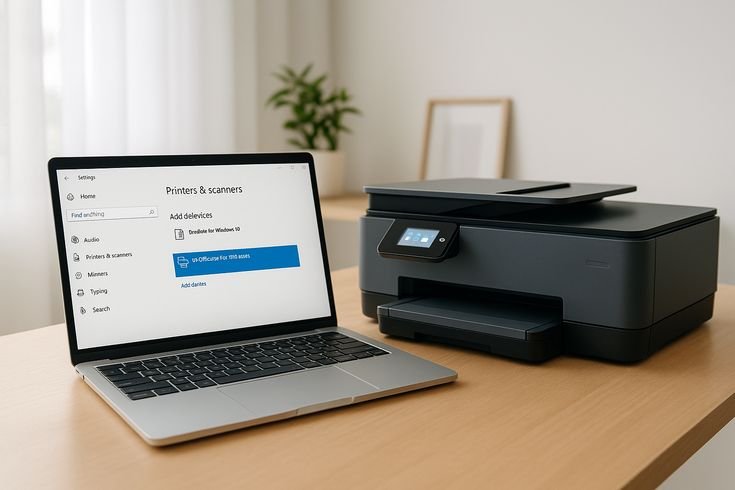
How to Fix It on Windows
- Click the Start menu.
- Open Settings > Bluetooth & devices > Printers & scanners.
- Locate your printer in the list.
- Click it, then click Set as default.
How to Fix It on Mac
- Click the Apple menu.
- Open System Settings > Printers & Scanners.
- Find your printer.
- Right-click and select Set as Default Printer.
Watch Out for “Ghost Printers”
You might occasionally see old or removed printers still hanging around. These are called “ghost printers” and they confuse your system. Remove any printer you don’t use anymore.
To delete one on Windows, click the printer and then click Remove. On Mac, click the minus (−) button below the list.
Trick #4 — Update or Reinstall Your Printer Driver
The printer driver is software that allows your computer to “communicate” with your printer. When that software is out of date, corrupt, or nonexistent — communication fails.
This is one of the most effective printer guide tricks out there. For more step-by-step help with driver issues and other common errors, visit Printer Troubleshoot Guide — a reliable resource for fixing all kinds of printer problems.
How to Check Your Driver
On Windows:
- Right-click the Start button.
- Open Device Manager.
- Find Printers in the list.
- Check for a yellow warning symbol next to your printer.
A yellow icon indicates there’s an issue with the driver. No icon? The driver you have may still be outdated.
How to Update the Driver
Option 1 — Via Windows Update:
- Head over to Settings > Windows Update.
- Click Check for updates.
- Check for optional driver updates and install them.
Option 2 — From the Manufacturer’s Website:
- Visit your printer brand’s website (HP, Canon, Epson, Brother, etc.).
- Search for your specific printer make and model.
- Download the latest driver for your operating system.
- Run the installer.
When to Reinstall, Not Just Update
If updating does not work, remove the driver completely and reinstall it from scratch.
On Windows: Open Device Manager > Printers, right-click your printer, and choose Uninstall device. Then reinstall the latest driver from the manufacturer.
This clean install often resolves issues that updates alone cannot.
Trick #5 — Troubleshoot Wireless Printer Connection
Wireless printers are convenient. But Wi-Fi connections introduce extra ways for problems to occur.
Here’s how this printer guide handles the most frequent wireless issues.
Problem 1: Printer Is on the Wrong Network
Your printer could be connected to a neighbor’s Wi-Fi or an old network. Yes, this actually happens.
Fix: On the printer screen, navigate to Network Settings and reconnect it to your correct Wi-Fi network. Every printer does it a little differently, but look for “Wireless Setup Wizard” in your printer’s menu.
Problem 2: Printer Is Too Far from the Router
Wi-Fi signal weakens with distance and walls. If your printer is in a different room, signal strength may be the issue.
Fix: Temporarily move the printer closer to the router. If the connection improves, you either need a Wi-Fi extender or a more permanent placement change.
Problem 3: Conflict Between 2.4GHz and 5GHz
Most current routers broadcast one 2.4GHz and one 5GHz network. Home printers are most often only 2.4GHz compatible.
If your computer is on the 5GHz network and your printer is on 2.4GHz, they may not be able to communicate with each other.
Fix: Ensure both devices are connected to the same network band. Connect your computer to 2.4GHz and see if the printer reconnects.
Wireless Connection Troubleshooting Table
| Problem | Quick Fix |
|---|---|
| Wrong network | Re-run the Wireless Setup Wizard |
| Weak signal | Move closer to the router |
| Wrong frequency band | Configure both devices to use 2.4GHz |
| IP address changed | Assign a static IP to the printer |
| Firewall blocking | Temporarily disable firewall to test |
Trick #6 — Clear the Print Spooler (The Secret Solution)
This is a slightly more technical but very effective trick. It resolves connection issues that nothing else appears to fix.
The Print Spooler is a Windows service that handles print jobs. If it gets overloaded or corrupted, it freezes. Print jobs pile up, nothing moves. Even when the printer is on and connected, it shows “offline.”
How to Clear the Print Spooler in Windows
Step 1: Open the Run box via Windows + R. Type services.msc and hit Enter.
Step 2: Scroll down to Print Spooler. Right-click it and select Stop.
Step 3: Open File Explorer. Navigate to this path: C:\Windows\System32\spool\PRINTERS
Step 4: Delete all files inside that folder. Do not delete the folder itself — only the files inside it.
Step 5: Return to Services, right-click Print Spooler again and click Start.
Step 6: Try printing again.
Why This Works
Deleting those spooler files clears out all the stuck print jobs. Starting the service again gives it a fresh start. It’s like clearing a traffic jam on a one-lane road.
Note: This applies to Windows only. Mac handles print queues differently. On Mac, open System Settings > Printers & Scanners, select your printer, and cancel all pending jobs.
Trick #7 — Check Your Firewall and Security Software Settings
This is perhaps the most underappreciated printer guide trick.
Your antivirus or firewall software secures your computer. But occasionally, it accidentally blocks your printer. It regards the printer communication as something potentially threatening and stops it.
How to Check If the Firewall Is to Blame
Quick Test: Temporarily disable your antivirus or firewall. Try printing. If it works, your security software was the issue.
Important: Reactivate your security software immediately after testing. Don’t leave it disabled.
How to Fix This Without Deactivating Protection
You never have to compromise security for printing. All you have to do is whitelist your printer.
On Windows Defender Firewall:
- Open Control Panel > Windows Defender Firewall.
- Click Allow an app or feature through Windows Defender Firewall.
- Find your printer software in the list.
- Make sure both “Private” and “Public” boxes are checked.
For third-party antivirus (Norton, McAfee, Avast, etc.): Open the software, navigate to Firewall or Network settings, and find the Exceptions or Trusted Devices section. Enter your printer’s IP address there.
According to Microsoft’s official support documentation, adding printer software as a firewall exclusion is a recommended step when resolving blocked device communication.
How to Find Your Printer’s IP Address
- Check your printer’s screen for Network Info or Wireless Status.
- The IP address will look something like:
192.168.1.45 - Write that number down. You will need it when adding the exception.
Bonus Tips: Low-Hanging Fruit for Fast Fixes
Here are a few more tips that don’t warrant an entire section but are incredibly useful nonetheless.
Run the Built-In Troubleshooter There’s a printer troubleshooter built into Windows. Navigate to Settings > System > Troubleshoot > Other troubleshooters and run the Printer troubleshooter. It hasn’t addressed everything, but it finds common problems quickly.
Check for Paper Jams or Low Ink Sometimes a printer appears as “offline” due to a hardware problem such as a paper jam or empty ink cartridge. Always check the physical printer for any alerts before assuming a software problem.
Update Your Operating System An outdated version of Windows or macOS may lead to compatibility issues with printer software. Make sure to keep your OS updated.
Try Printing from a Different Device If your printer works from your phone but not your laptop, the problem lies with the laptop, not the printer. That narrows things down quickly.
How These 7 Tricks Work Together
Sometimes one trick fixes everything. Sometimes you have to try a few in combination. Here’s a quick guide on where to begin, depending on your situation:
| Your Situation | Start With |
|---|---|
| Printer stopped working suddenly | Trick #1 — Restart Everything |
| Wired printer not detected | Trick #2 — Check Cables |
| Prints going to the wrong printer | Trick #3 — Set Default |
| Driver error in Device Manager | Trick #4 — Update Driver |
| Wi-Fi printer keeps disconnecting | Trick #5 — Wireless Fixes |
| Print jobs stuck in queue | Trick #6 — Clear Spooler |
| Works sometimes but gets blocked randomly | Trick #7 — Firewall Settings |
Use this table as your jumping-off point. If the first trick does not work for you, work your way down.
When to Seek Professional Help
The tricks above should fix most printer connection problems. But sometimes the problem is with the hardware.
Consider calling a technician if:
- Your printer grinds or clicks when trying to print
- It has been physically damaged or dropped
- Hardware error codes appear on the screen
- After attempting the printer guide multiple times, nothing fixes the issue
At that point, a professional repair or printer replacement may be the wiser course.
Conclusion
Printer connection issues can seem maddeningly frustrating. But they usually have simple, fixable explanations.
This printer guide walked you through 7 smart tricks — from restarting your devices and checking cables, to updating drivers, clearing the print spooler, and adjusting firewall settings. Each trick focuses on one specific type of problem.
The trick is to remain calm and handle them one after another. Don’t panic. Don’t rush to call a repair shop. Try these fixes first.
In most instances, it will take only about 15–30 minutes to get your printer back into working order.
Bookmark this guide. The next time your printer is misbehaving, you’ll know just where to begin.
Frequently Asked Questions (FAQs)
Q1: Why does my printer show “offline” when it is turned on? This typically means that your computer is unable to communicate with your printer. The most likely culprits are a dropped Wi-Fi connection, a stuck print spooler, or the wrong default printer setting. Start with Tricks #1, #3, and #6.
Q2: I changed my Wi-Fi password and lost the connection to my wireless printer. How do I reconnect? You have to update the Wi-Fi credentials on the printer itself. On most printers, open Network Settings > Wireless Setup Wizard and reconnect the printer to your network with the new password.
Q3: My printer worked yesterday. Why isn’t it connecting today? The connection may have been disrupted overnight due to a Windows update, a changing IP address, or a spooler error. First try Trick #1 (full restart), then look to Trick #6 (clear spooler), and then Trick #5 (wireless settings).
Q4: Is this printer guide useful for Mac as well as Windows? Yes. Most tricks apply to both. Tricks #3, #5, and #7 have Mac instructions built in. Trick #6 (Print Spooler) works only on Windows; Mac users can clear their print queue via Printers & Scanners settings.
Q5: Will I have to purchase new printer driver software? No. Drivers are always free from the manufacturer’s official website. Never pay for printer drivers. If a site charges for drivers, it is likely a scam.
Q6: My printer connects but only prints blank pages. Is that a connection problem? Not usually. Blank pages are usually caused by clogged print heads or empty ink cartridges. Run your printer’s built-in cleaning cycle and check ink levels.
Q7: How frequently should I update my printer driver? Check every 3–6 months or when you upgrade your OS. New OS updates sometimes disable older drivers, so keeping them up to date helps avoid issues down the road.
Q8: How can I simply verify if my printer is connected to the correct Wi-Fi? On most printers, press the Home or Menu button, scroll to Network or Wi-Fi Settings, and check the name of the network currently connected. Compare it to your home network name.