
8 Best Fixing Guide of Printer: To Troubleshoot Random Printing Failure
Meta Description: Printer guide failures making your prints suffer? Get 8 potent fixes to quickly stop printing fails — zero tech experience required. Save time, ink, and frustration today.
Your Printer Was Working — Until It Wasn’t
One minute your printer works just fine. The next, it’s spewing out blank pages, jamming at odd moments, or putting lines on your documents.
Sound familiar?
One of the most infuriating tech issues that people experience both at home and in the workplace is random printing failures. You didn’t change anything. You didn’t break anything. But suddenly, nothing prints right.
The good news? Most of those problems come back to something called the printer guide — and getting it right is easier than you think.
This article provides 8 strong, step-by-step solutions that target the most likely causes of random print fails. Whether you’re grappling with paper jams, misaligned prints, faint output, or a machine that refuses to play along — there’s a solution here for you.
Let’s get into it.
What Is a Printer Guide — and Why Should You Care?
Before we dive into the fixes, it’s useful to know what we’re up against.
Printer guide: The mixture of physical guides, software drivers, and settings that determine how your printer handles paper and ink. It’s like the steering wheel of your printer. When it is working well, everything interacts smoothly. When something’s off, chaos follows.
Printer guides include:
- Paper guides — the plastic arms that adjust inside your paper tray to keep paper aligned
- Print drivers — the software that tells your printer how to behave
- Print queue settings — the online queue of print jobs waiting to be printed
- Ink/toner guides — controls that adjust the amount of ink applied
When any of these goes wrong, random failures begin occurring. Pages skew sideways. Colors look off. Jobs get stuck in the queue. Jams for no apparent reason.
The fixes mentioned below each tackle one of these areas.
Solution #1 — Recalibrate Your Paper Guides Properly
This is the most neglected fix of all — and it corrects more problems than you might think.
Why Paper Guides Slip Out of Place
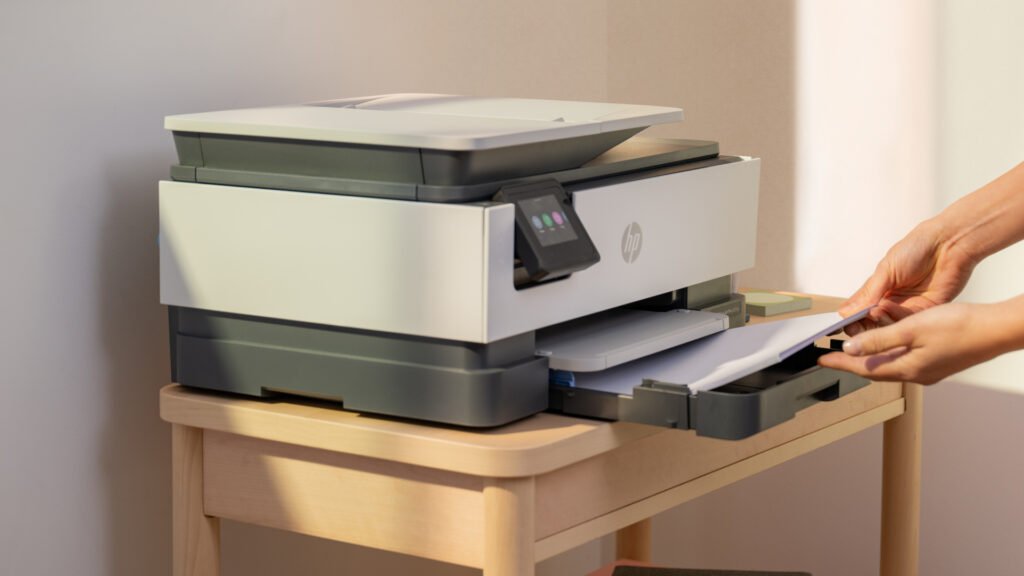
These are the small plastic sliders inside your paper tray called paper guides. They grip your paper tightly, keeping it in place so that it feeds directly into the printer. Over time, they shift. You load in the paper and let the guides move around a bit, and next thing you know your printer is feeding it at a strange angle.
That tiny angle causes:
- Paper jams halfway through printing
- Text that is printed too close to one edge
- Skewed pages that come out crooked
- Double-feeding (two pages at once)
How to Fix It
- Fully withdraw your paper tray
- Remove all the paper
- Pull the paper guides out completely to their widest position
- Put your stack of paper back in — it should be even and neat
- Slide both guides inward so they barely touch the paper — neither tight nor loose
- The paper should lift freely, with no gap
You’d be amazed how many random failures go away with this simple adjustment. Do it every time you fill up your paper tray.
Pro Tip: Fan your paper before loading it. Double-feeds lead to jams and misprints, which can happen when sheets are stuck together.
Solution #2 — Update or Reinstall the Print Driver
Your print driver acts as the software bridge between your computer and your printer. If it’s old, corrupted, or doesn’t match up, you’ll see all sorts of weird behavior.
Signs Your Driver Is the Problem
| Symptom | Possible Cause |
|---|---|
| Printer reports offline, but is actually connected | Corrupted driver |
| Print jobs become stuck in print queue | Driver crash |
| Random blank pages mid-document | Wrong driver version |
| Color printing completely wrong | Wrong printer driver installed |
| Printer works sometimes but not always | Outdated driver |
Steps to Update Your Driver
On Windows:
- Press
Windows + Xand select Device Manager - Expand the “Printers” section
- Right-click your printer and choose Update driver
- Choose “Search automatically for drivers”
- Restart your computer after updating
On Mac:
- Open System Settings → Printers & Scanners
- Select your printer
- Remove it by pressing the minus (−) button
- Then click the plus (+) button to re-add it
- macOS will install the latest driver automatically
For optimal results, go directly to your printer manufacturer’s website (HP, Canon, Epson, Brother, etc.) and install the latest driver for the exact model you own.
Solution #3 — Clear Your Entire Print Queue
A jammed print queue is like a traffic jam inside your computer. One bad print job stops everything that comes after it.
What Causes a Stuck Queue?
- The printer was off when a print job was sent to it
- A big file (like a high-res photo) began printing but could not complete
- The printer ran out of paper mid-job
- A network connection dropped while printing
How to Clear the Queue on Windows
- Go to Control Panel → Devices and Printers
- Double-click your printer icon
- You will see all pending jobs listed
- Right-click on each job and choose Cancel
- If jobs won’t cancel, do this:
- Press
Windows + R, typeservices.msc, hit Enter - Scroll to Print Spooler
- Right-click it and select Stop
- Open File Explorer and navigate to:
C:\Windows\System32\spool\PRINTERS - Delete all files inside that folder (not the folder itself)
- Return to Services, right-click Print Spooler, and choose Start
- Press
How to Clear the Queue on Mac
- Go to System Settings → Printers & Scanners
- Click your printer
- Select Open Print Queue
- Click the X next to each job to remove it
When the queue is completely empty, attempt printing a test page.
Fix #4 — Use the Printer’s Built-In Diagnostic Tools
The vast majority of us never even use our printer’s built-in utilities. That’s a mistake.
What Diagnostic Tools Can Do
Modern printers — especially HP, Canon, and Epson models — are packed with self-diagnostic features. These tools can:
- Test ink nozzles and identify clogs
- Check alignment and print a calibration page
- Run a paper feed test to find mechanical issues
- Display error codes that identify specific problems
How to Access Diagnostics
From the printer’s control panel:
- Look under a “Setup,” “Tools,” or “Maintenance” menu
- Select “Print Quality Report” or “Nozzle Check”
- The test page will show the locations of issues with your printer
From your computer (HP example):
- Open HP Smart or HP Printer Assistant software
- Go to Troubleshooting
- Run Print Quality Diagnostics
- Follow the on-screen instructions
From your computer (Epson example):
- Open Epson Printer Utility
- Click Nozzle Check
- Then run Head Cleaning if any clogs are detected
These tools do the detective work for you. Use them before trying more complex fixes.
Fix #5 — Prevent Ink and Toner Problems from Getting Worse
Most of the random failures are caused by issues with ink and toner. Prints come out faded, streaky, or missing sections — often for no apparent reason.
Common Ink and Toner Problems
| Problem | What You’ll See | Fix |
|---|---|---|
| Clogged nozzles | Horizontal lines or gaps in print | Run head cleaning cycle |
| Low ink/toner | Faded text, light patches | Replace cartridge |
| Air bubbles in cartridge | Random blank spots | Gently shake cartridge |
| Wrong cartridge installed | Colors completely off | Verify model number |
| Dried ink from non-use | No ink at all | Run multiple cleaning cycles |
How to Clean Your Print Heads
Inkjet printers:
- Go to your printer software → Maintenance → Head Cleaning
- Run the cycle (this takes 1–3 minutes)
- Print a test page
- Repeat up to 3 times if needed (don’t run more than three cycles in a row — it uses a lot of ink)
Laser printers:
- Remove the toner cartridge carefully
- Gently rock it side to side (not up and down) to redistribute toner
- Reinsert the cartridge
- Print a test page
Important: Do not shake an inkjet cartridge — only laser toner cartridges. Shaking an inkjet may damage the print head.
For more step-by-step help with ink and hardware issues, visit Printer Troubleshoot Guide — a dedicated resource for solving all types of printer problems quickly and easily.
Fix #6 — Examine Your Network and Connection Settings
If you print via Wi-Fi or a network, connection issues can cause seemingly random failures that appear to be hardware problems — but are not.
The Most Common Connection Problems
- Router restarts and printer gets a new IP address
- Weak Wi-Fi signal where printer is located
- Printer stuck in “offline” mode
- Firewall preventing communication between PC and printer
- Multiple instances of the same printer driver installed (conflicts)
How to Fix Wi-Fi Printing Issues
Step 1: Set a static IP address for your printer
This prevents your router from giving your printer a different address each time it reboots.
- Get the current IP address for your printer (typically in Settings → Network Info)
- Log into your router (generally at 192.168.1.1 or 192.168.0.1)
- Find the DHCP reservation section
- Assign that IP address to your printer’s MAC address
Step 2: Put your printer into Online mode
- Open Control Panel → Devices and Printers
- Right-click your printer
- If you see Use Printer Offline, click it to bring it back online
Step 3: Check signal strength
Relocate your printer closer to your router, or use a Wi-Fi extender if the signal is poor. A weak signal leads to mid-print dropped connections — which appears just like a random failure.
According to HP’s official wireless printing support guide, most wireless printing failures are caused by IP address conflicts or signal interference — both of which are fixed by the steps above.
Solution #7 — Check Your Paper and Print Settings
Sometimes the issue is not with hardware at all. It’s a settings mismatch. Your printer believes it is printing on a different type of paper while, in fact, you’ve loaded something entirely different.
Settings That Cause Random Failures
| Setting Mismatch | What Goes Wrong |
|---|---|
| Paper set to A4, but Letter loaded | Cut-off margins, partial prints |
| Photo paper setting, but plain paper loaded | Ink smears, paper jams |
| Duplex (2-sided) on, but printer doesn’t support it | Error messages, blank pages |
| Draft quality selected for photos | Terrible image quality |
| Wrong paper weight setting | Feed problems, jams |
How to Fix Settings Mismatches
Before every print job:
- Click File → Print
- Click Printer Properties or Preferences
- Make sure paper size matches what is loaded
- Confirm the correct paper type (plain, glossy, cardstock, etc.)
- Set the quality level appropriate for what you are printing
In your printer’s physical settings:
- Access the printer’s menu panel
- Go to Paper Setup or Tray Settings
- Adjust the paper size for each tray you use
It takes 30 seconds and avoids a massive number of random failures.
Solution #8 — Deep Clean and Physically Inspect Your Printer
As a last resort, your printer may need some hands-on care. Dust, debris, and worn rollers cause problems that no software fix can correct.
What to Look for During a Physical Inspection
Paper feed rollers: These are rubber wheels that grab the paper and pull it through the printer. They get dusty, glazed over, or worn down with time. When that happens, paper slips, misfeeds, or jams.
How to clean rollers:
- Power down the printer and unplug it
- Open all access panels
- Dampen a lint-free cloth with distilled water (not tap water)
- Wipe down each roller you’re able to reach
- Do not plug back in until everything is completely dry
Debris inside the printer: Even small bits of torn paper or dust can make sensors misfire. Use a can of compressed air to clear debris from inside the printer. Keep it upright and use short bursts.
Ink smears on rollers: If you see ink on your rollers, clean them well. Ink on rollers transfers to every page that passes through — creating random smear marks that mimic printing errors.
Preventive Maintenance Schedule to Avoid Future Failures
| Task | How Often |
|---|---|
| Clean paper guides | Every paper refill |
| Run nozzle check | Monthly |
| Clean rollers | Every 3 months |
| Update drivers | Every 6 months |
| Deep clean interior | Every 6 months |
| Replace worn rollers | Every 2–3 years |
Quick Comparison: Which Fix Solves Which Problem?
| Random Failure Symptom | Most Likely Fix |
|---|---|
| Paper jams constantly | Fix #1 (Paper Guides), Fix #8 (Rollers) |
| Printer shows offline | Fix #2 (Driver), Fix #6 (Network) |
| Jobs stuck in queue | Fix #3 (Clear Queue) |
| Faded or streaky prints | Fix #5 (Ink/Toner) |
| Colors completely wrong | Fix #2 (Driver), Fix #5 (Wrong Cartridge) |
| Crooked or skewed pages | Fix #1 (Paper Guides) |
| Blank pages randomly | Fix #3 (Queue), Fix #5 (Clogged Nozzles) |
| Print cuts off at edges | Fix #7 (Settings Mismatch) |
| Works sometimes, not always | Fix #6 (Network/Connection) |
Printer Guide Fixes and Random Printing Failures — FAQs
Why does my printer just stop printing halfway through the job?
This usually occurs due to a jammed print queue, a dropped Wi-Fi connection, or a paper feed issue. Begin with Fix #3 (clearing the queue) and Fix #6 (checking your connection). If the issue persists, verify your paper guides (Fix #1).
How do I check if my print driver is corrupted?
Symptoms include the printer appearing “offline” despite being clearly turned on, jobs that vanish from the queue without printing, and error messages that fail to align with any obvious issue. Reinstalling the driver (Fix #2) virtually always fixes this.
Can I use any paper in my printer?
No. Printers are designed to use specific paper weights and types. Using paper that is too thick or too thin, glossy when the printer expects plain, or loading it in a tray not meant for a particular type of sheet creates feed failures and jams. Always match your paper settings to what’s physically loaded (Fix #7).
How often do I need to clean my printer?
Do a light cleaning — paper guides and a nozzle check — once a month if you print regularly. Every 3–6 months, go for a deep clean of rollers and the interior. Those who rarely print (once a month or less) should perform a nozzle check before every use, as ink can dry out and clog the nozzles during long periods of inactivity.
Why is my printer printing blank pages?
The majority of blank pages are due to either clogged ink nozzles (Fix #5), an empty or poorly seated cartridge (Fix #5), or a corrupted print job in the queue (Fix #3). First, do a nozzle check — that shows you immediately whether ink is flowing properly.
Should I leave my printer on or turn it off when not in use?
With inkjet printers, it’s actually better to leave them on, or to switch the power off using the button on the printer itself (not by unplugging it). Doing it properly allows the printer to cap the print heads correctly, which helps prevent ink from drying out. Sudden power cuts can leave heads uncapped and create clogs.
Why does my wireless printer keep going offline?
Most likely your router is assigning your printer a new IP address after reboots. You can solve this by setting a static (reserved) IP address for your printer in your router settings (Fix #6). This keeps the connection stable and solves the “offline” problem.
Stop Letting Random Failures Win
Random printing failures seem unpredictable — but they aren’t. The cause of almost every printing failure is clear, and most causes have an obvious fix.
Here’s a quick summary of all 8 printer guide fixes:
- Reset paper guides — snug but not tight, every time you reload
- Update or reinstall your driver — particularly following OS updates
- Clear the print queue — remove stuck jobs and restart the spooler
- Run built-in diagnostics — have the printer tell you what’s wrong
- Resolve ink and toner issues — clean heads, change cartridges, check compatibility
- Check network and connection settings — static IP, check signal strength
- Fix settings mismatches — match paper type and size every time
- Deep clean your printer — clean rollers, blast out dust, inspect for debris
Start at the top of this list and work your way down. The vast majority of people find their problem solved in the first three or four fixes. If you work your way through all eight and still have problems, it might be time to contact your printer manufacturer’s support line — but that is rarely necessary.
A bit of attention goes a long way. Look after your printer, and it will look after you.