Meta Description: Printer guide checks are important things to do before installing a new printer. These 5 things must be done to prevent setup errors, will help avoid compatibility issues and loss of time.
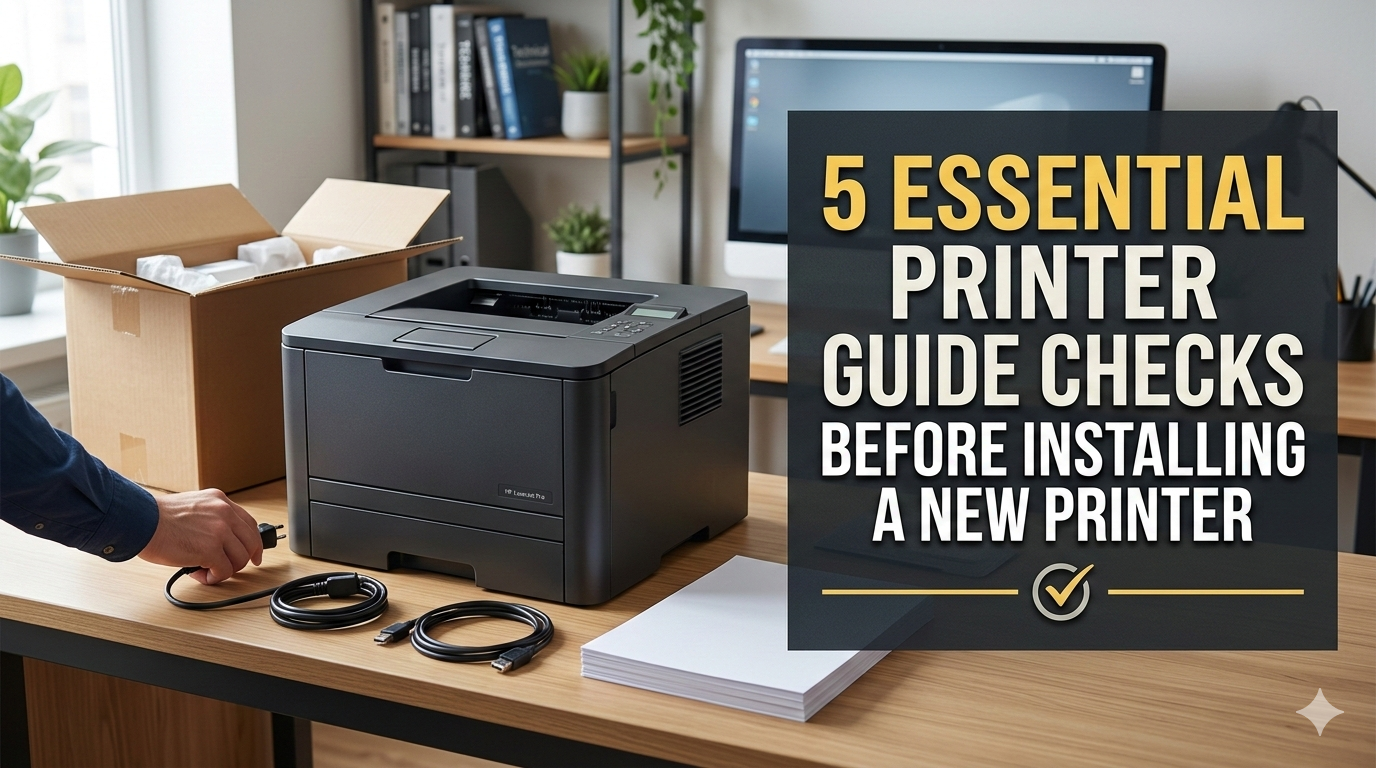
Installation Tip: 5 Things You Should Check Before Setting Up a New Printer
So, you’ve purchased a new printer. Maybe it’s still in its box, on your desk. You’re eager to get it up and running — wait a minute.
One of the most common mistakes is rushing into a printer installation without first checking a few key things. Which results in failed setups, error messages and plenty of frustration.
This printer guide exists to spare you that headache.
Your installation can go smoothly the first time, whether you’re setting up a printer at home, in a small office or for school with these five essential checks. No need for a tech background — just follow along, step by step.
Let’s get into it.
Why Pre-Installation Checks Actually Matter
The vast majority of people jump right to plugging things in. That’s where the problems start.
A printer seems basic — you plug it in, load the software and print. But there’s more at play behind the scenes. Your computer must detect the printer. Make sure you get the drivers for your operating system. Read carefully, you have to set up the network properly. And your workspace has to be prepared.
Missing these checks can result in:
- Drivers that won’t install
- A printer your computer cannot locate
- Print quality issues right out of the box
- Wi-Fi or USB connectivity failures
- Mismatched colors or jagged lines on test prints
A few minutes spent 15–20 before installation will save hours of debugging later on. That is a trade-off worth making every single time.
Check 1 — Ensure Your Printer Works With Your Device
This is the first thing that needs to be confirmed. Compatibility is everything.
Is The Printer Compatible With Your OS?
Each printer is compatible with certain operating systems only. Some printers support Windows only. Some also work with macOS, Linux, or Chrome OS. If your printer’s not built for your system, it won’t work at all — or it’ll work badly.
Here’s a quick rundown of what to watch for:
| Operating System | Common Compatibility Notes |
|---|---|
| Windows 10 / 11 | Supported by most current printers |
| macOS (Ventura, Sonoma) | Check for macOS-specific drivers |
| Linux (Ubuntu, Fedora) | Limited support; check open-source drivers |
| Chrome OS | Best with Cloud Print-enabled devices |
| Android / iOS | Look for Wi-Fi Direct or AirPrint support |
Where to Find Compatibility Info
The simplest place to find that is on the manufacturer’s website. Find a section called “drivers and downloads.” Enter your printer model and choose your operating system. You’re fine if drivers are available. If the answer is no, you might want to take another look at your configuration.
You can also look in the printer’s box or manual. You’ll often find compatibility info on the side panel of a product box or inside its quick-start guide.
32-bit vs. 64-bit — Yes, That Makes a Difference
One thing that most people miss is the difference between 32-bit and 64-bit systems. The printer does not install correctly if you download the incorrect driver version. Before downloading anything, head to your computer’s settings and check which version you’re on.
- On Windows: Open Settings → System → About and check “System type.”
- On Mac: All modern Macs are running 64-bit, so this is generally not an issue.
Getting compatibility right at the outset provides a foundation for everything else.
Check 2 — Check the Printer Hardware Before Anything
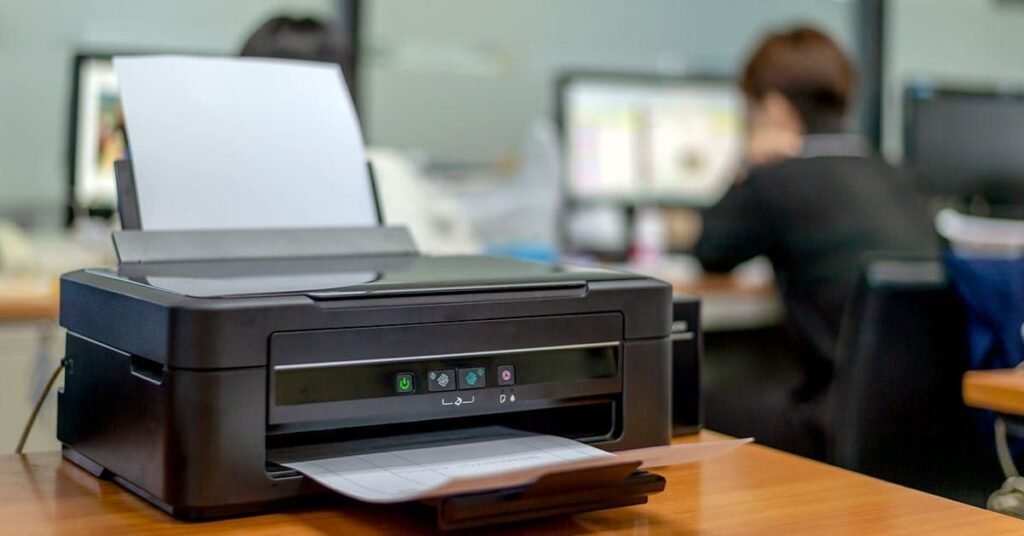
Before you even start thinking about software, take a very close look at the printer itself.
Unbox With Care
This may seem obvious, but it’s easy to speed through unboxing. Carefully pull everything out and lay it on a flat surface. Check for:
- Dents on the body or cracked plastic
- Damage to the paper tray or the output tray
- Loose parts rattling inside
- Physically damaged connectors (USB port, power jack)
If anything looks damaged, stop. Photograph the damage, then contact the retailer or manufacturer before taking action. A faulty printer should never be installed.
Remove All Packing Materials
Tape, foam inserts and plastic wrapping are found inside the body of printers when they ship. These all need to be removed before turning the printer on.
Common places packing materials hide:
- Inside the ink cartridge bay
- Underneath the paper tray
- Around the print head assembly
- Under or below the scanner glass (on all-in-one printers)
Any of these left inside can jam the printer or even damage moving parts permanently.
Check What Comes in the Box
Refer to the manual or manufacturer’s website for a “what’s in the box” list and ensure you have everything. A typical package includes:
- The printer unit
- Power cord
- USB cable (sometimes — not always!)
- Ink or toner cartridges (starter cartridges)
- Quick-start guide
- Installation CD (less common now)
Don’t have a USB cable or starter cartridges? Those will need to be picked up prior to installation. Better to discover that now than halfway into setup.
Check 3 — Review Your Connection and Network Setup
One of the main ingredients in a smooth setup is how your printer connects to your devices. This section of the printer guide is where most attention should be paid.
Know Your Connection Types
Most printers these days come with multiple ways to connect. Each has its own set of requirements.
| Connection Type | What You Need | Best For |
|---|---|---|
| USB (Wired) | USB cable, open computer port | Single-user, simple setups |
| Wi-Fi (Wireless) | Wi-Fi network name (SSID), password | Multiple users, home/office networks |
| Ethernet (Wired Network) | Ethernet cable, router with available port | Office environments, stable connections |
| Bluetooth | Bluetooth-enabled device | Mobile printing, short range |
| Wi-Fi Direct | No router required | Direct connection from device to printer |
Setting Up Wi-Fi — What You Should Know First
Wi-Fi printing requires more steps than USB, but is a convenience in itself. Before you start, collect this info:
- Your Wi-Fi network name (SSID) — the name you see when searching for Wi-Fi on your phone or laptop
- Your Wi-Fi password — you’ll need to enter this on the printer’s display or with the setup software
- Your router’s frequency band — most home printers connect only to 2.4 GHz networks, not the 5 GHz ones. If your router provides both, double check that you’re connecting to the right one.
The last point is a very frequent source of confusion. When your printer can’t find your Wi-Fi network, switching to 2.4 GHz almost always solves it instantly.
Put Your Printer in the Right Place
In Wi-Fi setups, distance and obstructions count. The signal can be weakened by thick walls, metal furniture and other electronics.
Place your printer:
- Within around 15–20 feet of your router if you can
- Away from microwaves or cordless phones (they disrupt 2.4 GHz signals)
- In an open area, not in a closed cabinet
This step only takes 2 minutes and can save you hours of signal-related troubleshooting down the road.
💡 Helpful Resource: If you run into connection issues after setup, Printer Troubleshoot Guide is a great place to find step-by-step fixes for the most common printer problems.
Check 4 — Get the Proper Drivers and Software
This is where most people go wrong by simply shoving an old CD in or using whatever Windows auto-installs. That process results in out-of-date drivers and lost functionality.
Why Driver Version Matters So Much
A printer driver is the piece of software that allows your computer to communicate with the printer. The wrong version can cause:
- Missing print settings or options
- Poor print quality
- Scanning features that don’t actually work (when using all-in-one printers)
- The printer not being detected at all
Always download the most recent driver directly from the manufacturer’s website. Don’t rely on third-party sites.
Step-by-Step: Choosing the Right Driver
- Visit the official site for your printer brand (HP, Canon, Epson, Brother, etc.)
- Find the “Support” or “Drivers & Downloads” section
- Type in your exact printer model number (located on the front or top of the printer)
- Choose your OS and edition
- Download the complete driver package (not just the basic driver, if possible)
- Open the installer and follow the on-screen steps
Full Package vs. Basic Driver — What’s the Difference?
| Option | What It Includes | Best For |
|---|---|---|
| Basic Driver | Core print functionality only | Quick setup, minimal features needed |
| Full Software Package | Driver + printer management tools, scanning software, ink monitors | Most users — recommended |
| Universal Print Driver | Works with multiple printer models | IT environments, multiple printers |
The full software package is the right option for most home and small office users. It gives you the works — print, scan, copy, fax (if supported), and ink monitoring tools.
Don’t Skip the Firmware Update
After the driver is installed, check if your printer has a firmware update available. Firmware is the software that’s built into the printer itself. The updates can include bug fixes, performance improvements and sometimes new features.
Most printer management software will automatically prompt you to update firmware. If not, check for a firmware section on the manufacturer’s support page.
According to HP’s official support documentation, keeping your printer’s firmware up to date can also help protect against security vulnerabilities — something many users overlook entirely.
Check 5 — Get Your Workspace Ready and Pre-Print Test Plan
The final check is to set up your physical space and expectations. This one is generally totally ignored — and that’s too bad, because it ties everything together.
Set Up the Right Environment for Your Printer
Printers are sensitive to their surroundings. This is what the correct workspace looks like:
- Flat, stable surface — uneven surfaces can cause paper jams and alignment issues
- Adequate clearance — at least 4–6 inches on all sides for paper loading, output tray extension and ventilation
- Not in direct sunlight — UV light damages ink cartridges and causes fading
- Low-humidity area — too much moisture and paper can warp and jam; too little can cause static problems
- Close to a power outlet — avoid long extension cords if possible; always use a surge protector
How to Install Ink or Toner Cartridges Correctly
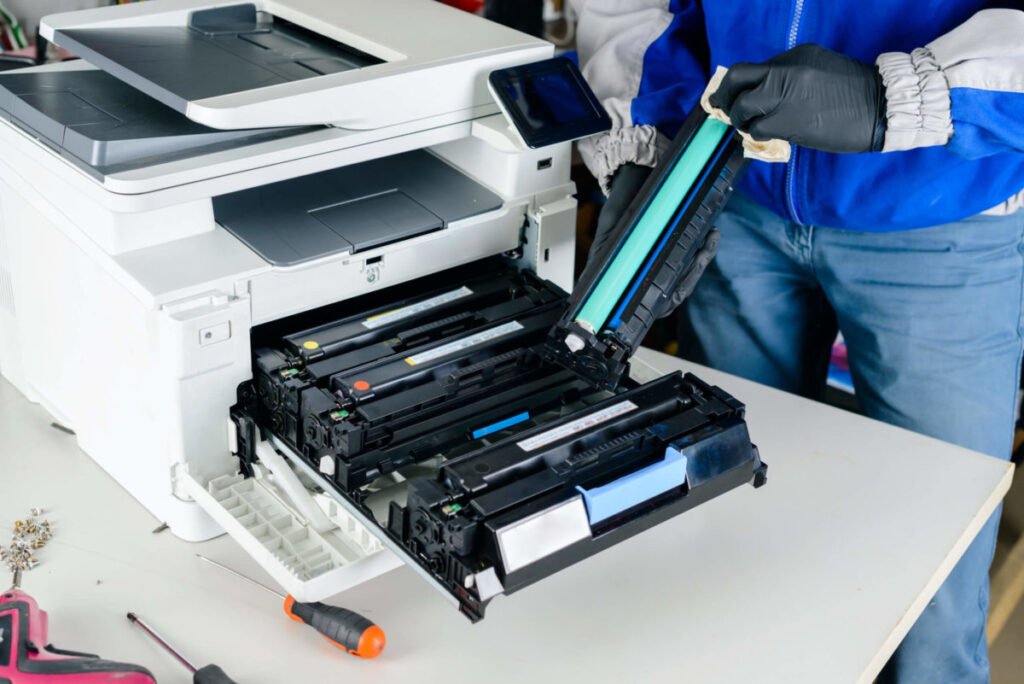
Starter cartridges are included with most printers. They must be installed before the printer powers on for the first time, or during the initial setup wizard.
Follow the manual’s instructions closely. Incorrectly forcing cartridges in can ruin the cartridge bay. Common mistakes include:
- Not peeling off the protective tape on the cartridge nozzle
- Cartridges installed in the incorrect color slot
- Failure to press the cartridge in firmly enough (it should click into place)
If your printer uses a print head that’s separate from the cartridge, handle that part even more carefully — it’s fragile and costly to replace.
Why Paper Matters More Than You Think
Insert the appropriate paper type before running your first test print. Most printers default to standard A4 or Letter-size plain paper. If you load the incorrect size without changing your paper guide settings, you’ll get misaligned prints or error codes.
Check:
- Markers in the tray are set to the correct paper size
- Paper is flat, not bent or curled
- Paper stack is not too thick (see your manual for maximum sheet capacity)
Take a Test Print and Alignment Check
Run a test print before printing any real documents. It is built into nearly every printer — a self-test page. This shows you:
- That all ink colors are printing properly
- Whether the print alignment is straight
- Whether the nozzles are clean and unclogged
If your test print shows streaks, gaps, or misaligned colors, run a print head cleaning and alignment calibration from the printer’s settings menu before proceeding.
Quick Reference: Pre-Installation Checklist
Here’s a one-stop summary of everything covered in this printer guide:
| Check | What to Verify |
|---|---|
| ✅ Compatibility | OS match, 32/64-bit driver, device support |
| ✅ Hardware Inspection | No damage, all packing removed, all parts included |
| ✅ Connection Setup | Connection type chosen, Wi-Fi details ready, printer placement |
| ✅ Drivers & Software | Latest driver downloaded, full package installed, firmware updated |
| ✅ Workspace & Test | Surface stable, cartridges installed, paper loaded, test print run |
Common Mistakes People Make During Printer Setup
Using this guide can help you avoid some common mistakes. Here’s what to watch out for:
Using an old installation CD — CDs that accompany printers are usually out of date by the time you pull them from the box. Instead, always download fresh drivers directly from the website.
Connecting the USB before the software says to — Many printer installers ask you specifically not to connect during a certain portion of the setup. If you connect too soon, the installer gets confused. Read each step carefully.
Ignoring the 2.4 GHz vs. 5 GHz Wi-Fi problem — This confuses more people than almost anything else. This is the first thing to check if Wi-Fi setup fails.
Skipping the test print — Taking a test print isn’t just satisfying — it confirms everything is working before attempting to print something important.
Not registering the printer — Many manufacturers offer extended warranty and free support if you register your device. It only takes two minutes and is well worth it.
FAQs About Printer Setup and Installation
Q: Do I have to use a CD to install my printer? No. Most printers today don’t need a CD. All drivers and software can be downloaded directly from the manufacturer’s site. In fact, that may actually be the better option since online downloads are always more current.
Q: My computer won’t find my printer over Wi-Fi. What should I do? It can be one of three things: the printer is connected to 5 GHz and not 2.4 GHz, the printer and computer are on different network segments, or the firewall is blocking discovery. Check your Wi-Fi frequency first, and then try disabling your firewall temporarily during setup.
Q: Can I set up the same printer on several computers? Yes. For USB printers, drivers must be installed on every computer. For network or Wi-Fi printers, you add the printer via network settings on each device — much easier for households or offices.
Q: What’s a starter ink cartridge and how is it different from a regular one? Starter cartridges are provided or included with new printers. They have less ink than regular cartridges — typically 30–50% less. They’re intended to get you started and calibrate the printer. Since they’re smaller, expect to replace them faster than full-capacity cartridges.
Q: Should I update my printer’s firmware right away? Yes. Firmware updates regularly patch bugs and security vulnerabilities that could impact performance. Check for updates right after the initial setup is complete.
Q: My printer installed successfully, but print quality is terrible. What should I do? Perform a nozzle check and print head cleaning from your printer’s settings menu. Also be sure you are using the appropriate paper type setting in the print dialog. A lot of low-quality results come from the wrong paper setting rather than a broken printer.
Q: Can I use third-party ink cartridges safely? It can be. Some third-party cartridges are cheaper and work fine. But poor quality ones can cause print heads to clog or void your warranty. If you use them, only use well-known brands with proven reviews.
Wrapping It All Up
Setting up a new printer doesn’t have to be stressful.
While following a good printer guide and performing these five pre-installation checks — compatibility, hardware checkup, connection setup, driver downloads and workspace preparation — you take the guesswork out of the equation entirely.
You won’t be left wondering why your printer isn’t visible on your computer. You won’t have hazy test prints or a paper jam caused by leftover packaging. What you’ll have instead is a working printer, configured correctly, in one shot.
Take the extra 20 minutes. It’s always worth it.
And after your printer is up and running, save this guide somewhere accessible. These five checks will ensure that the next time you (or someone you know) installs a new printer, it’s a smooth install rather than an afternoon of frustration.